News - دفاع روبنسون يتباعد عن مؤامرات أوينز
Business Strategy
دفاع روبنسون يتباعد عن مؤامرات أوينز
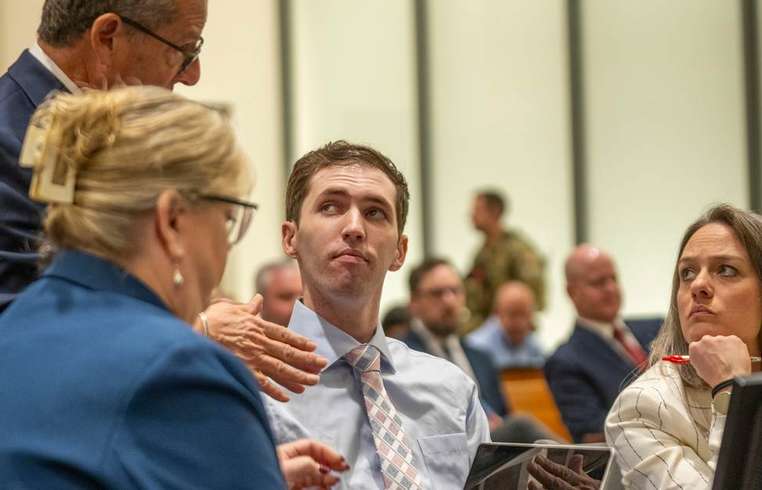
In the heated legal battle surrounding Tyler Robinson, accused of assassinating Charlie Kirk, Robinson's defense team is urgently trying to draw a line between their structured legal strategy and the rampant online conspiracy theories being pushed by figures such as Candace Owens. The defense has dismissed these narratives as 'noise' and 'crazies,' emphasizing their irrelevance to the case's facts. With bizarre emails and calls pouring in, the defense reiterates they're not swayed by external chatter but focused on legal proceedings. Robinson's attorneys recently filed a motion to preclude a death penalty consideration, arguing Robinson's intent was solely directed towards Kirk without additional harm intended. This motion starkly contrasts with the 'evidence' touted by online theorists. Despite the chaotic surrounding discourse, the defense asserts its commitment to justice, steering clear of unfounded conspiracies. As the preliminary hearing concluded in July, the legal teams are in a race against time, with prosecutors given until August 18 to respond. Notably, Judge Tony Graf will decide if the case advances to trial by September 1. Robinson remains on the cusp of entering a plea, with potential plea agreements still on the table. The defense's stance is a clear rebuff to the distractive narrative Owens and others propagate, aimed at ensuring fair legal proceedings unfettered by 'crazies.' Online responses continue to reflect polarized views, with conspiracy theorists undeterred by the legal team's disavowal, persisting in crafting sensational tales. Robinson's defense upholds that the case's resolution rests squarely in the courtroom dynamics and the factual matrix, not in the frenzied noise of social media.
About usyoo

Categories
Tags