News - New Dinosaur Species Unearthed in Southern Patagonia
Business Strategy
New Dinosaur Species Unearthed in Southern Patagonia
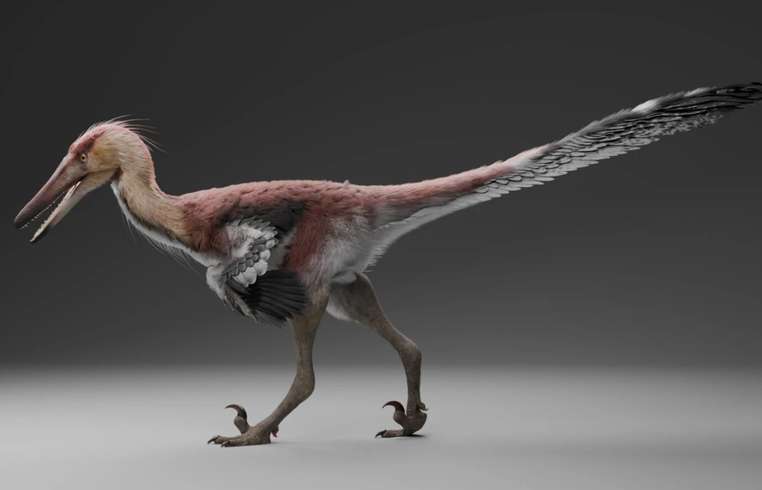
A groundbreaking discovery has been made in Southern Patagonia with the unearthing of a new species of predatory dinosaur, named Kank australis. This formidable creature inhabited the Earth roughly 70 million years ago, during a period when dinosaurs dominated the land. Unveiled in the esteemed Journal of Vertebrate Paleontology, this discovery sheds light on the behavioral patterns and physical characteristics of ancient predators. Kank australis belonged to the unenlagiidae group, known for their agility and predatory prowess, akin to the velociraptors made famous by pop culture. However, this Patagonian predator exhibited unique adaptations that suggest its lifestyle was somewhat distinct from its cinematic counterparts. Unlike the land-obsessed velociraptors, Kank australis's anatomical features hint at a predilection for aquatic environments, mirroring the hunting behaviors of modern herons. The dinosaur's vertebral column, crucial for understanding its posture and movement, displays distinct adaptations for muscle attachment and a robust network of blood vessels—the signature of efficient carnivorous hunters. With an estimated length of 2.5-3 meters, it was capable of swift movements both on land and possibly in water, hinting at a versatile predatory mode. Research led by esteemed paleontologist Mathias Motta and his team meticulously studied the skeletal remains, which were remarkably well-preserved. The strategic neck vertebrae indicate a highly flexible neck similar to that of modern-day herons, suggesting that Kank australis may have been an adept fisherman in the water systems of ancient South America. This discovery fills a significant evolutionary gap within the unenlagiidae family, whose fossils were predominantly found in the northern parts of Patagonia. The presence of Kank australis in the south offers a new perspective on the geographical distribution and adaptive evolution of this lineage during the late Cretaceous period. Kank australis stands as a testament to the incredible biodiversity and the complex ecological niches that were present on Earth millions of years ago. As excavations continue, this find symbolizes the ever-evolving narrative of our planet's prehistoric past and opens avenues for further research into the transitional phases of dinosaur evolution.
About usyoo

Categories
Tags