News - Blue Origin's setbacks pose challenges for lunar missions
Business Strategy
Blue Origin's setbacks pose challenges for lunar missions
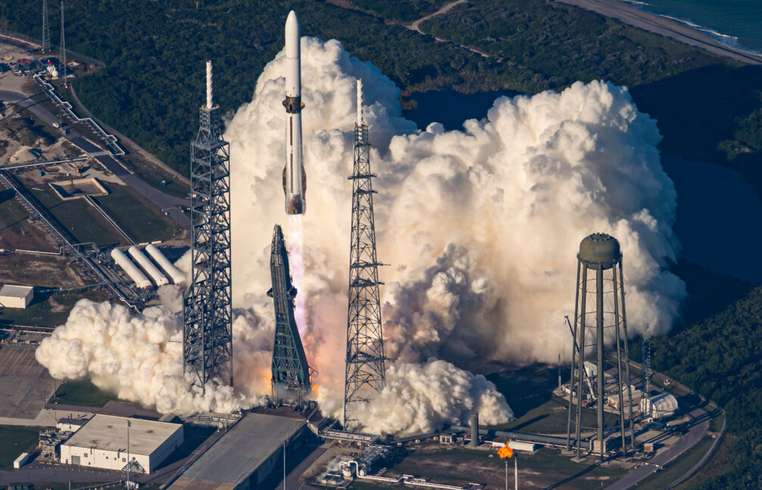
Blue Origin's recent challenges with its New Glenn rocket have significant implications for NASA's lunar exploration plans, particularly the Artemis program. The Blue Moon Mark 1 lander, designed by Blue Origin to deliver payloads to the Moon, cannot currently launch on other rockets such as SpaceX's Falcon Heavy or United Launch Alliance's Vulcan due to potential compatibility issues and competitive dynamics. This poses a challenge to the timely execution of NASA's Moon Base development and the Artemis missions. The Artemis program, a cornerstone of NASA's future lunar exploration, has been counting on multiple partners, including Blue Origin, to provide crucial elements like landers. However, the issues surrounding the Blue Moon lander's flight readiness could lead to either significant delays or a restructuring of mission timelines. For example, lunar rovers under development by companies like Astrolab and Lunar Outpost, designed to have a considerable payload capacity, can only be delivered by either the Mark 1 or SpaceX's Starship. NASA had recently adjusted the Artemis III mission to include a rendezvous of the Orion spacecraft with landers from Blue Origin and SpaceX in low-Earth orbit, aiming for a 2027 launch with four astronauts. With the current state of Blue Moon, it's becoming increasingly unlikely that it will be ready on schedule, forcing NASA to reconsider a more singular reliance on SpaceX's Starship. Artemis IV, originally intended to further the human presence on the Moon, faces similar complications. A crew-rated Blue Moon lander for this mission is foreseeable only in the distant future, further solidifying SpaceX's strategic importance. NASA may have to rely extensively on SpaceX's capability to meet its ambitious lunar goals, reflecting broader trends in the industry where SpaceX's Starship emerges as a critical platform for near-term lunar exploration. These developments highlight the intricate dependencies and critical timelines in contemporary space exploration and underscore the urgent need for innovative solutions in overcoming technical and logistical hurdles. NASA finds itself navigating these complexities, steering its lunar mission objectives amidst industry interdependencies and strategic alignments, all while prioritizing the broader scope of human exploration beyond Earth's orbit.
About usyoo

Categories
Tags