
News - Turkish police clash with protesters as political tensions rise
Business Strategy
Turkish police clash with protesters as political tensions rise
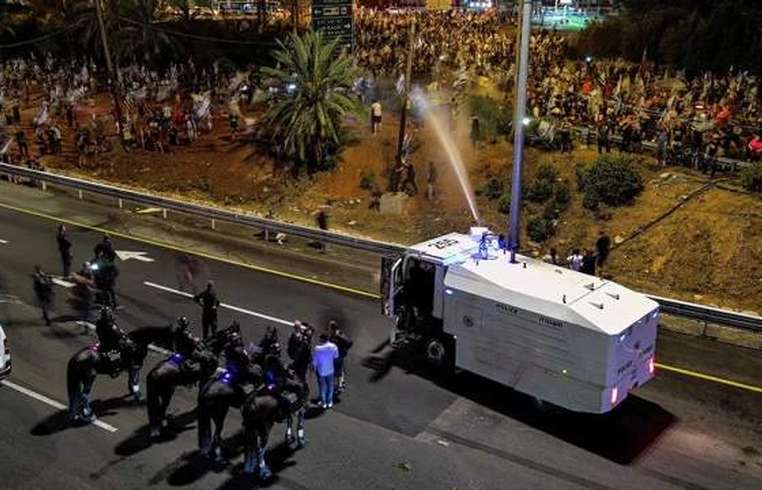
In a turbulent clash between Turkish authorities and opposition supporters, police forces employed water cannons to thwart a gathering for a speech by Özgür Özel, recently ousted leader of the Cumhuriyet Halk Partisi (CHP), Turkey's main opposition party. The confrontation occurred amidst escalating political tensions following an Ankara court's decision to annul the results of a CHP congress. The congress had elected Özel as the leader, but the decision was perceived by many as a politically charged maneuver to reinstate Kemal Kılıçdaroğlu, a longstanding figure in the party's leadership. Özgür Özel's supporters, rallying against what they claim to be a judicial assault on democracy, faced harsh responses from riot police who set up barriers and deployed pepper spray to disperse demonstrators in İzmir, a CHP stronghold. The police's heavy-handed tactics have been criticized by human rights groups and spark a broader discourse on the ruling party's tightening grip over opposition voices in Turkey. The annulment decision has reignited grievances within the CHP, propelling Özel into the national spotlight and galvanizing his base. Özel accused the government of orchestrating the verdict to suppress genuine democratic expression and maintain control over political narratives in Turkey. He has vowed to continue his political struggle, despite the judicial barriers. The tension arises amidst ongoing concerns over the state of democracy under President Recep Tayyip Erdoğan's administration. Erdoğan’s government has been repeatedly accused of clamping down on dissent, controlling media narratives, and influencing the judiciary, allegations it denies. The return of Kılıçdaroğlu, viewed as part of this broader strategy to undermine opposition momentum, has sharpened political divisions within the country. Analysts suggest that the current political climate in Turkey stands at a critical juncture. As the country prepares for upcoming elections in 2024, both CHP and the ruling AKP face internal and external challenges to maintain unified voter bases and campaign messages. The broader implications of these tensions are likely to echo throughout Turkey's political landscape, influencing both domestic and international perceptions of its democratic processes.
About usyoo

Categories
Tags