

News - Tragic Repatriation: Italian Scuba Divers' Final Journey Home
Business Strategy
Tragic Repatriation: Italian Scuba Divers' Final Journey Home
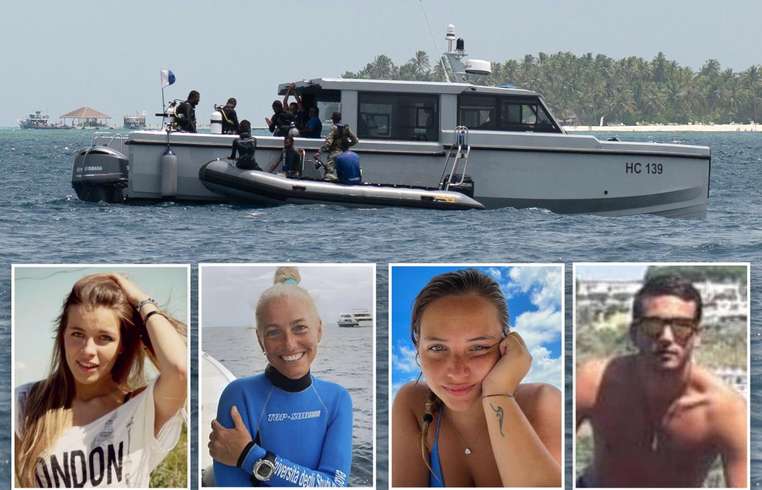
In a heart-wrenching closure to a devastating tragedy, the bodies of four Italian scuba divers, who drowned in the mysterious underwater caverns of the Maldives, have been solemnly repatriated to their homeland. The tragic loss has stirred a wave of grief across Italy as the nation mourns the loss of such highly esteemed individuals. Among the deceased were Monica Montefalcone, a distinguished marine biologist affiliated with the University of Genoa; her young and vibrant daughter, Giorgia Sommacal; Muriel Oddenino, a passionate researcher; along with Federico Gualtieri, a recent graduate with a bright future ahead. Their lifeless bodies were finally retrieved from the haunting depths of the underwater cave and were brought back to Italy early on Saturday, enveloped in an aura of sadness. Montefalcone and Gualtieri's remains were discovered on Tuesday by a meticulously trained squad of Finnish divers, whereas the bodies of Sommacal and Oddenino were recovered the following day. They were confined in the third and deepest chamber of the cave, bearing silent witness to their futile struggle for survival, with empty oxygen tanks silently narrating their tale. Gianluca Benedetti, a revered diving instructor and the captain of their expedition’s boat, was found earlier on May 14 itself, tragically separated from the group near the cave's entrance, casting an even darker shadow of mystery over the incident before the search efforts were prematurely halted due to inclement weather. Following Benedetti’s discovery, his remains were transported aboard a repatriation flight arriving in Milan last Tuesday, and preparations are underway for a scheduled autopsy on Monday to shed light on the circumstances of his demise. This disaster, marked as the worst diving accident recorded in Maldivian history, unfolded in the forbidding depths of a cave 164 feet beneath the serene yet deceptively perilous waters of the Vaavu Atoll. The Italian prosecutor's office in Rome is currently probing the incident under charges of culpable homicide, paralleling the legal framework of manslaughter. The investigation seeks to uncover the rationale behind the experienced divers' decision to surpass the sanctioned Maldivian recreational diving threshold of 100 feet, especially without possessing the requisite training, permits, or proper equipment—an enigma yet to be unraveled. Finnish rescuers have speculated that the divers likely succumbed to oxygen deprivation after becoming disoriented in the labyrinthine cave. The chances of survival dwindled rapidly as diminishing visibility and intrusive sediment clouded their view, sealing their fate in the shadowy depths. However, Benedetti's solitary separation from the group adds a layer of complexity and bewilderment to the ongoing investigation. Authorities suggest he might have been engaged in a desperate attempt to escape, only to tragically run out of air before he reached the life-giving surface. In the aftermath, both Albatros, the Italian operator of the dive boat, and the University of Genoa, under whose aegis some researchers embarked on a scientific sojourn, have categorically disassociated themselves from the unauthorized dive, asserting that such an endeavor was neither sanctioned nor anticipated. Italian judicial authorities are leaving no stone unturned in their comprehensive inquiry, having interrogated three professors from the University of Genoa, including Stefano Vanin—a passenger on the ill-fated boat ‘Duke of York,’ whose license has been temporarily suspended by the Maldivian authorities. These scholars, however, abstained from participating in the ill-fated dive. As investigators meticulously analyze the recovered diving apparatus and GoPros, hopes linger that they might unveil new revelations to solve this tragic mystery that has left a lasting scar on the diving community and beyond.
About usyoo

Categories
Tags