

News - Armenia's Ombudsman Inspects Detainee's Rights Amid Election Tensions
Business Strategy
Armenia's Ombudsman Inspects Detainee's Rights Amid Election Tensions
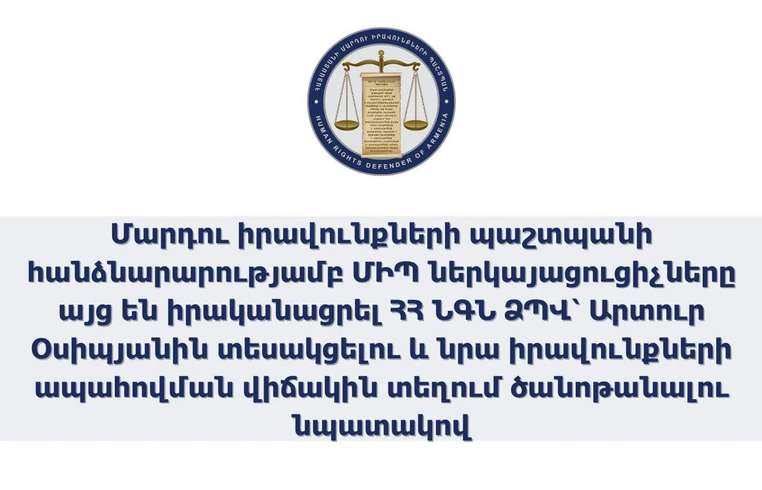
The Human Rights Defender of Armenia, Anahit Manasyan, recently made a notable visit to a detention facility, focusing on the case of Artur Osipyan. Osipyan, a key figure amid the nation's charged electoral environment, was detained following a provocative interaction during a political campaign event in Yerevan's Arabkir district. This encounter has since sparked significant discussion over civil liberties and political expression in Armenia. On May 19, Manasyan, determined to uphold the principles of fairness and transparency in legal proceedings, visited the facility, aiming to ensure Osipyan's rights are duly observed. The incident arose from Osipyan's outspoken challenge to Prime Minister Nikol Pashinyan during a public appearance. His questions regarding financial transparency and governance created a notable disruption, leading to his removal by security personnel. Following this, Osipyan was detained, an action that has since drawn attention and criticism from rights advocates. Manasyan's office is conducting an extensive review, focusing on whether Osipyan's detention aligns with the legal standards and whether his fundamental rights have been preserved. Her visit underscores a broader commitment to maintaining a justice system free of political bias, especially crucial during the national election period. This scrutiny aims to reaffirm public trust in Armenia's democratic processes, ensuring all voices are heard without fear of repression. During her visit, Osipyan opted against a private conversation with representatives from the Ombudsman’s office, reflecting possible distrust or dissent toward the existing proceedings. This refusal adds a layer of complexity to the ongoing investigation, challenging the Ombudsman's office to decode and navigate the nuances of public confidence and legal integrity. The Human Rights Defender's proactive stance in Osipyan's case represents a pivotal intervention as Armenia grapples with maintaining democratic integrity while safeguarding individual freedoms. This situation highlights broader dialogues on governance, civil engagement, and the delicate balance of power amid the heat of political contestation. As Manasyan’s office continues its investigations, the emphasis remains on upholding justice and transparency. This commitment is critical for fostering an electoral environment that is not only free and fair but visibly equitable to all stakeholders involved. Osipyan's case, emblematic of potential political and social tensions, serves as a reminder of the ongoing necessity to vigilantly protect democratic norms and civil rights in Armenia and beyond.
About usyoo

Categories
Tags