

News - Copper Prices Skyrocket Due to Surge in Global Demand
Business Strategy
Copper Prices Skyrocket Due to Surge in Global Demand
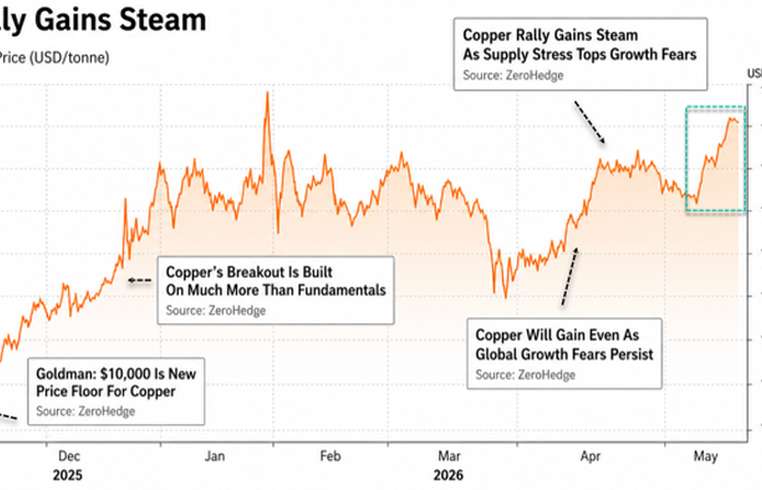
Copper prices are witnessing an unprecedented surge, soaring above the $14,000 per ton mark in London this Tuesday, marking a 13% increase since the start of the year. Several interconnected factors are fueling this remarkable climb. Key among them is the revival of Chinese demand, as the nation's economic activities ramp up post-pandemic, igniting a robust quest for copper in various industrial applications. Contributing significantly to the upward trajectory is the tightening of copper inventories globally. This scarcity is further exacerbated by a critical shortage of sulfur in the Middle East, a region that plays a pivotal role in the supply chain. The sulfur shortage disrupts the copper production process, adding more pressure to already strained inventories and contributing to the hike in prices. Moreover, the copper market is buoyed by the advent of advanced AI infrastructure technologies. As industries gear up for electrification and expansive grid developments, copper's role becomes indispensable. Its conductivity and resilience make it the metal of choice for wiring in smart grids and data centers, pivotal elements of future tech landscapes. This trend dovetails with a broader industrial pivot towards sustainability and technological advancements, heightening investment interests in copper. Economists and experts at JPMorgan have been closely monitoring these trends, predicting continued volatility in copper prices driven by these dynamics. They highlight the need for strategic investments and adaptive supply chain measures to navigate the evolving landscape. This confluence of factors underscores copper's critical role in future industrial innovation and infrastructural growth, poised to shape market futures profoundly.
About usyoo

Categories
Tags