News - Trump's Declining Approval: Current Ratings and Trends
Business Strategy
Trump's Declining Approval: Current Ratings and Trends
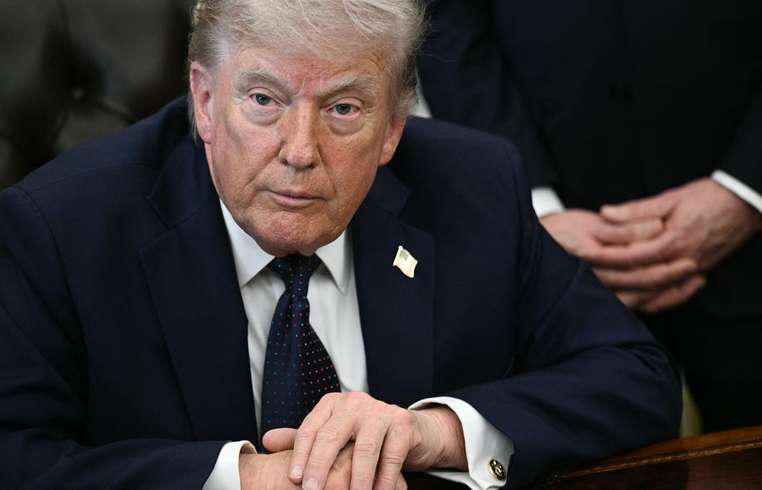
President Donald Trump's approval rating has reached a historical low for his second term, as indicated by multiple polls this week. Rising tensions with Iran, combined with escalating economic issues such as increasing gas prices, have contributed to this decline. The standoff between the U.S. and Iran has intensified due to setbacks in negotiation efforts. The U.S. continues to enforce a maritime blockade on Iran, while Iran has responded by targeting commercial vessels in the Strait of Hormuz. Both nations have engaged in reciprocal seizures of ships, worsening the conflict. To manage these tensions, President Trump has extended the temporary ceasefire between Israel and Lebanon by an additional three weeks. This decision aims to create a more conducive environment for U.S.-Iran peace talks. Furthermore, a U.S. delegation is scheduled to meet with Iran's top diplomat in Pakistan for another round of negotiations. In a recent diplomatic twist, Prince Harry called on Russian President Vladimir Putin to stop the conflict in Ukraine, raising eyebrows just days before King Charles III and Queen Camilla are set to visit the U.S. at Trump's invitation. The royal visit, planned from April 27 to 30, includes a White House dinner, private meetings with the President, and a congressional address. Analyzed through recent polling data, Trump's approval ratings are as follows: Real Clear Polling shows a 40.5% approval and 57.7% disapproval; Reuters/Ipsos indicates a 36% approval and 62% disapproval; The New York Times displays a 39% approval and 58% disapproval; The Associated Press/NORC reports a 33% approval and 67% disapproval; The Economist highlights a 38% favorable view and a 56% unfavorable view; Rasmussen Reports offers a 44% approval and 54% disapproval; Morning Consult features a 44% approval and 53% disapproval; Lastly, the American Research Group reports a 32% approval and 63% disapproval. Reviewing historical data, Trump's current ratings lag behind his first term's average of 41%. Former Presidents show varying final term ratings: Joe Biden - 40%, Barack Obama - 59%, George W. Bush - 34%, Bill Clinton - 66%, George H.W. Bush - 56%, Ronald Reagan - 63%, Jimmy Carter - 34%, Gerald Ford - 53%, Richard Nixon - 24%. Despite the simplicity of approval ratings, they remain a crucial measure of presidential performance and political influence, according to Gallup. Although valuable, extreme partisanship has complicated their interpretive power. Analysis by Pew Research Center supports that partisanship significantly skews approval ratings. Ultimately, a president's approval rating encapsulates not only public satisfaction but also plays a pivotal role in political forecasting and potential electoral outcomes. This summary offers insights from Maria Francis, contributing to USA TODAY Network's deeper examination of presidential rating dynamics.
About usyoo

Categories
Tags