News - Virginia Voters Reject GOP's 2026 Redistricting Tactics
Business Strategy
Virginia Voters Reject GOP's 2026 Redistricting Tactics
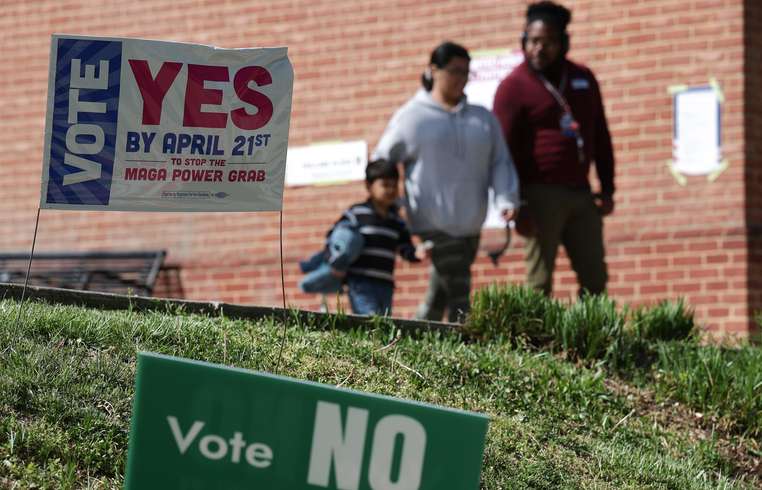
In a significant political development, Virginia voters have approved a crucial referendum aimed at countering the Trump-led Republican effort to dominate the 2026 midterm elections through gerrymandering. This landmark decision opens a pathway for the Democratic Party to potentially secure four additional seats in the U.S. House of Representatives, significantly impacting the balance of power in Congress. The referendum, passed by a narrow margin of fewer than 100,000 votes, authorizes temporary amendments to the Virginia state constitution. These changes enable the General Assembly to redraw congressional district lines for the upcoming elections, ensuring a fair representation that had been skewed by recent GOP attempts at redistricting. After the 2030 census, Virginia will revert to its standard redistricting process. Virginia Governor Abigail Spanberger heralded the outcome as a victory for democratic principles and a rebuff to President Trump's claims of entitlement to additional Republican seats. "Our community has shown resilience and a commitment to true representation," said Spanberger. She emphasized the importance of voter agency and expressed pride in Virginia’s stand against the nationwide tide of GOP-led gerrymandering efforts. The restructured district map, previously greenlit by state lawmakers, proposes a configuration where Democrats hold eight secure seats, with two additional districts leaning Democratic but competitive. Republicans are left with one district deemed favorable, a stark contrast designed to offset partisan manipulations seen in states like Texas. In the broader political landscape, former U.S. Attorney General Eric Holder lauded the Virginia referendum, noting its implications beyond state borders. He cited the state’s decisions as reflective of national frustration with perceived voter disenfranchisement orchestrated by Republican-controlled states. "This act of defiance upholds the essence of democratic elections," Holder declared, pointing out the rippling effects across the political spectrum. Democratic leadership, including House Minority Leader Hakeem Jeffries, affirmed the strategic victory while cautioning that the battle against gerrymandering is not over. Jeffries spotlighted the ongoing resistance in Florida, where similar Republican maneuvers threaten electoral fairness. He underscored the readiness of Democrats to aggressively contest these manipulations, aiming to unseat several GOP incumbents in the upcoming elections. Basking in the triumph of the moment, Rep. Alexandria Ocasio-Cortez expressed her support for the continued Democratic struggle against partisan gerrymandering. Her sentiments echoed the determination among progressives to uphold electoral integrity and challenge any attempts to disrupt democratic processes. As Virginia sets a precedent with its bold stance, the political wave it generates may very well influence other states grappling with similar redistricting controversies. With national eyes on the unfolding dynamics, this chapter marks a critical juncture in the ongoing saga of American electoral politics.
About usyoo

Categories
Tags