News - China's Deep-Sea ROV Revolutionizes Undersea Cable Technology
Business Strategy
China's Deep-Sea ROV Revolutionizes Undersea Cable Technology
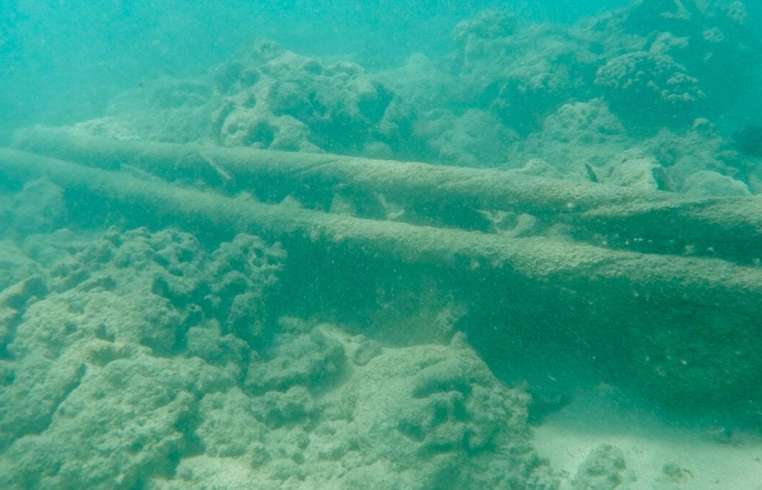
In a critical development for the global telecommunications landscape, Chinese maritime researchers have successfully tested an advanced remotely operated vehicle (ROV) capable of severing and repairing undersea fiber-optic cables at an astounding depth of 11,483 feet. As global economies rely heavily on the over 745,000 miles of submarine cables for internet and financial transactions, China's innovation outpaces existing technologies from Japan and the UAE, limited to depths of 9,843 feet. The venture, reported by China’s Ministry of Natural Resources, was conducted by the Haiyang Dizhi 2 research vessel on April 11th. This new ROV employs electro-hydrostatic actuators (EHAs), a sophisticated mechanism incorporating technologies originally honed in aerospace engineering. These actuators represent a shift from traditional cumbersome hydraulics, integrating the hydraulic system with electric motors for more compact and efficient units, crucial in the deep-sea environment where space and control are pivotal. Moreover, China's strides in undersea technology include a diamond-coated grinding wheel unveiled the previous year, which works in tandem with the ROV. Spinning at 1,600 rpm, the tool can cut through metal with precision while maintaining a clean working environment on the ocean floor. This technological leap positions China prominently in an arena already fraught with geopolitical tensions. The strategic importance of submarine communications has led to growing concerns about potential conflicts over these vital infrastructures. With escalating suspicions of maritime sabotage and the West's efforts to limit Chinese involvement, this development can shift power dynamics. Analysts, like April Herlevi of the Center for Naval Analyses, highlight the risk of network fragmentation into localized systems, intensifying a digital divide reminiscent of Cold War geopolitics. However, Chinese scientists underline the potential commercial benefits, such as enhancing the repair capabilities of underwater oil and gas pipelines, aligning with China’s broader maritime and economic strategy as articulated by leading engineer Hu Haolong. While the technology is potent, its application remains dual-purpose, with global implications. This advancement symbolizes not just technological progress but also strategic prowess in an increasingly digital and interconnected world.
About usyoo

Categories
Tags