

News - Tech Sales Plummet: Mindfactory's Data Reveals Stark CPU Decline
Business Strategy
Tech Sales Plummet: Mindfactory's Data Reveals Stark CPU Decline
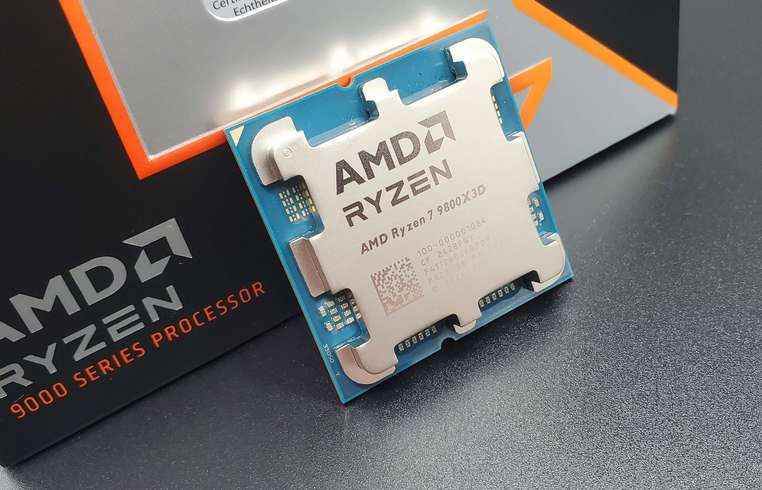
In the realm of data analysis, longitudinal tracking can often elucidate emerging trends with sharp clarity. Such is the case for Mindfactory, a prominent German retailer, whose recent CPU sales data starkly reflect the trajectory of the PC market at present. The data detailed here is provided by TechEpiphany, a YouTube channel known for its diligent weekly aggregation of sales figures for CPUs, GPUs, and motherboards. Although the primary data source is Mindfactory, the insights likely extend beyond, owing to TechEpiphany's comprehensive approach, occasionally drawing from platforms like Amazon as well. A deep dive into the weekly sales of AMD and Intel CPUs from the third to the fifteenth week of this year highlights a concerning trend: a pronounced drop in sales, eerie in its clarity upon graph visualization. This steep decline prompted TechEpiphany's eye-opening comment, "In 10 years of tracking retail CPU sales, I have never seen such a steep decline." While this assessment relies notably on data from Mindfactory, it's reasonable to infer similar patterns across other retail landscapes, partially driven by discerning PC enthusiasts monitoring the broader tech market. Despite advancements in CPU, GPU, and motherboard technology, an increasing number of consumers are postponing comprehensive system upgrades. A significant factor in this consumer reticence is the elevated cost of essential components. Currently, the cost of a basic 1 TB NVMe drive on Amazon is approximately $160. A 32 GB kit of DDR5-6000, meanwhile, carries a $380 price tag at Newegg, aggregating to a sizable $540 for a memory and storage upgrade alone. This sum is provocatively equivalent to acquiring both a new RTX 5060 graphics card and a Ryzen 5 7600X processor, illustrating the difficult choice facing potential buyers. With such high prices acting as a barrier, consumers sensibly opt to delay full system upgrades. Contrast this with last year's figures, where under $200 procured a 1 TB PCIe 4.0 SSD and a 32 GB kit of powerful DDR5. It appears that economic affordability in tech hardware may remain on the distant horizon, potentially over another year's time. This narrative, captured through the lens of Mindfactory's sales and TechEpiphany's analytical prowess, underscores significant market shifts. With these insights, industry observers and consumers alike are prompted to reassess their expectations of the PC market, pricing, and the feasibility of their future tech investments.
About usyoo

Categories
Tags