News - U.S. Spacecraft on Historic Lunar Flyby: Strategic Move in Space Race
Business Strategy
U.S. Spacecraft on Historic Lunar Flyby: Strategic Move in Space Race
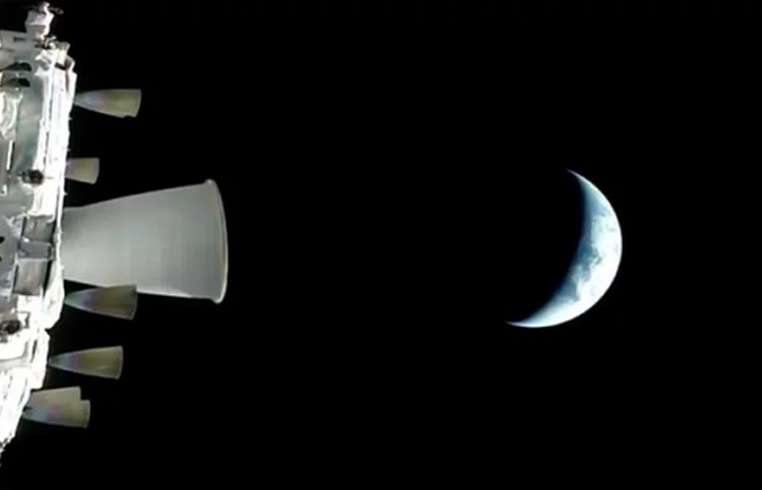
America embarks on its first crewed lunar mission in over 50 years as Artemis II sets a course for the Moon, with a flyby that aims to test critical systems and record new distances in human space exploration. This pivotal mission comprises four astronauts who will traverse the far side of the Moon, coming within 4,000 miles of its surface, before their planned splashdown in the Pacific Ocean. The mission marks a significant stride in the Artemis program, initially spearheaded by former President Trump's Space Policy Directive 1 to reinvigorate lunar presence and pave the way for future Mars exploration. The mission's paramount objective is to validate life-support systems aboard NASA's Orion capsule, ensuring preparedness for subsequent lunar landings. Meanwhile, NASA's broader strategy underscores the development of nuclear propulsion technologies, deemed essential for reducing Mars mission transit times and propelling the U.S. ahead in the burgeoning space race with China. This ambitious aspiration includes deploying a mini-nuclear reactor on the Moon, integral to sustainable extraterrestrial operations. Historically, the U.S. space program has been a beacon of diplomatic and technological prowess. As the Artemis II mission unfolds, it highlights a renewed commitment to space exploration with an eye on geopolitical dimensions. Given China's aggressive space agenda, NASA's proactive measures, including future nuclear-electric propulsion demonstrations, represent a strategic endeavor to maintain leadership beyond Earth. NASA's announcement of new propulsion systems as part of a 2028 mission to Mars is anticipated to consolidate America's influence in space. By drastically cutting journey times, the U.S. strategy not only aims at scientific milestones but also serves as a salient reminder of its enduring space dominance amid global competition. The current mission can be tracked live via NASA's dedicated online platforms. As the U.S. continues to push cosmic boundaries, Artemis II not only symbolizes technological advancement but also the enduring spirit of discovery against the backdrop of evolving global dynamics.
About usyoo

Categories
Tags