
News - GOP Looks for Surprise Victory Amid California Democratic Division
Business Strategy
GOP Looks for Surprise Victory Amid California Democratic Division
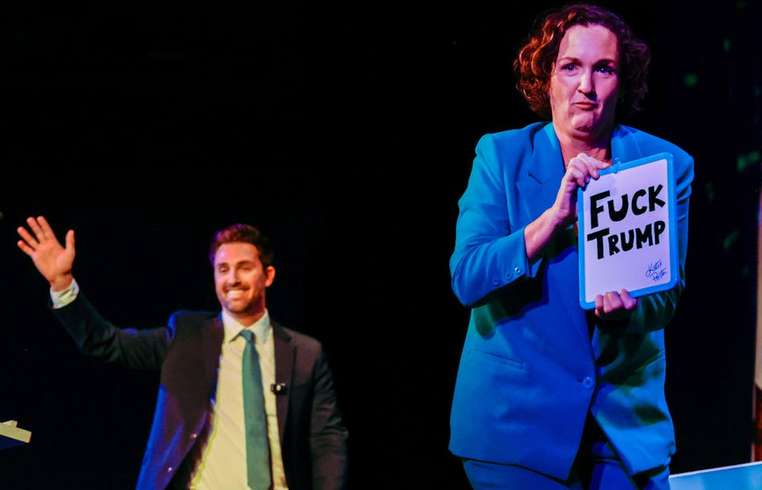
California's gubernatorial race is showcasing unusual dynamics for a state traditionally dominated by Democrats. Despite its Democratic-leaning tendencies, exemplified by Vice President Kamala Harris capturing 59 percent of the vote in 2024 compared to 38 percent for former President Donald Trump, the upcoming election is far from predictable due to internal party fragmentation. Among ten candidates vying for the governorship, eight belong to the Democratic Party, creating a highly competitive environment with no standout frontrunner. Republican candidates Bianco and Hilton currently garner around 20 percent each, capitalizing on the split Democratic vote. Meanwhile, the Democratic candidates, including notable figures such as former Representative Katie Porter, billionaire Tom Steyer, and Representative Eric Swalwell, struggle to distinguish themselves. This situation leaves the voter base fragmented, as they vie for slices of the Democratic support, trapping the party in stagnant single-digit or low-teen support levels. Adding to the uncertainty, polls reveal that 15 to 25 percent of voters remain undecided, potentially swaying the final outcome depending on how the candidates address these uncommitted individuals. The absence of a definitive successor for outgoing Governor Gavin Newsom has exacerbated this political gridlock. Former attempts by potential frontrunners like Lieutenant Governor Eleni Kounalakis, who later switched to the state treasurer race, and Senator Alex Padilla, who decided to remain in the Senate despite urgencies to join the gubernatorial race, reflect this vacuum. Harris also opted not to enter the race, further diluting potential Democratic coherence. Although the Democrats were hopeful about candidates with profound political experiences, such as Xavier Becerra and Antonio Villaraigosa, they too have struggled to ignite significant momentum within a crowded field. As these candidates continue their campaigns, the landscape remains volatile, with multiple Democratic hopefuls continuing to vie for prominence without a clear leader, contrasting with the unified GOP push. Thus, as November approaches, the specter of an unexpected Republican victory looms larger due to Democratic intraparty competition.
About usyoo

Categories
Tags