

News - NASA Faces Medical Challenges as Moon Missions Intensify
Business Strategy
NASA Faces Medical Challenges as Moon Missions Intensify
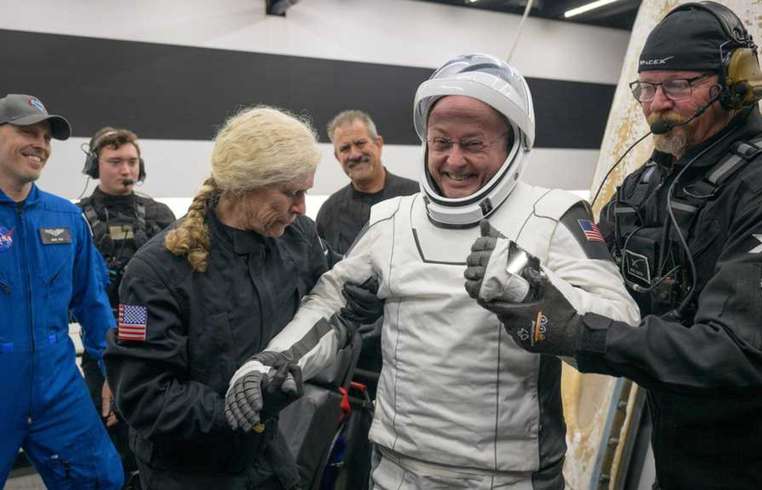
As NASA accelerates its plans for lunar exploration through the Artemis program, the space agency faces an urgent challenge: ensuring astronaut safety during deep-space missions far from the immediate assistance available on Earth. This issue has come into sharp focus following a mysterious medical episode that struck veteran astronaut Michael Fincke aboard the International Space Station (ISS) earlier this year. During a routine evening on January 7, 2026, while dining after preparing for a spacewalk, Fincke suddenly found himself unable to articulate words. The incident, which alarming occurred without any evident pain or warning, lasted approximately twenty minutes, compelling his crewmates to swiftly communicate with NASA's flight surgeons on Earth. This medical anomaly subsequently prompted NASA's groundbreaking decision to execute its first-ever emergency medical evacuation from orbit. Despite extensive medical evaluations and analyses, NASA's team has not yet determined the underlying cause of Fincke's episode, although a heart attack has been definitively excluded. This uncertainty poses significant concerns for upcoming missions under the Artemis program, where astronauts will venture further than ever before, aiming to establish a sustained human presence in cislunar space and on the moon's surface. In this larger context, unexplained medical incidents could evolve into serious risks rather than isolated anomalies. With objectives set to include a $20 billion lunar base, these missions will demand operational health measures and emergency protocols suited to the constrained conditions of long-duration spaceflight. As Artemis II's April 2026 launch date looms—with its mission to propel four astronauts on a 10-day lunar orbit—the emphasis on resolving such potential health issues has never been more critical. The incident involving Fincke, who was on NASA's SpaceX Crew-11 mission with colleagues Zena Cardman, Kimiya Yui of JAXA, and Oleg Platonov of Roscosmos, also emphasizes the need for comprehensive medical leaves system in the event of unforeseen health crises. Direct interventions, like the use of ISS's onboard ultrasound machinery during Fincke's episode, illustrate the importance of equipped facilities and trained personnel capable of addressing acute medical needs in space. The unplanned cancellation of the subsequent spacewalk and the premature return of Crew-11 underscore the urgent necessity of expanding NASA's understanding of and preparedness for health challenges in space. For astronauts like Fincke, who has since returned to his regular activities feeling well, the incident serves as a stark reminder of the unpredictable nature of space travel. As NASA continues its preparations for deeper space missions, these recent developments underscore a pressing need for resilient medical support to safeguard the well-being of astronauts venturing into the vast, unknown reaches of space.
About usyoo

Categories
Tags