

News - Innovative Study Reveals Cochlea's Role in Speech Perception
Business Strategy
Innovative Study Reveals Cochlea's Role in Speech Perception
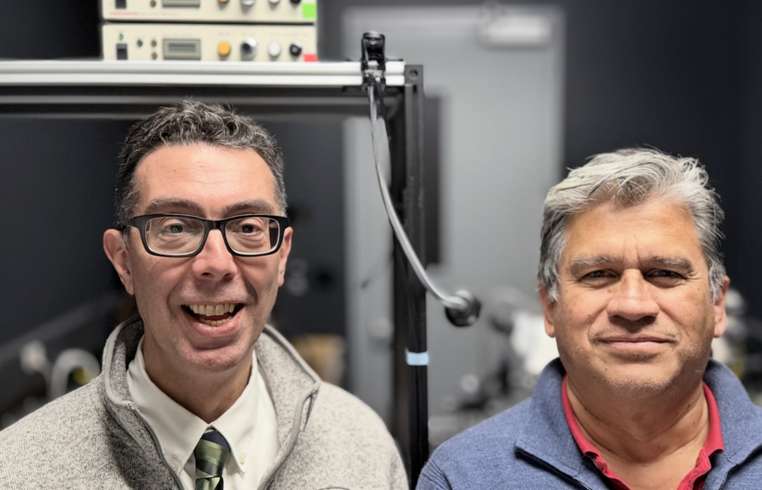
USC researchers John Oghalai, MD, and Alberto Recio, PhD, are exploring a fundamental question: why do older adults find understanding speech in noisy environments challenging? They have received a grant from the American Hearing Research Foundation (AHRF) to investigate this, focusing specifically on the role of the cochlea. Their work is supported by an AHRF Discovery Grant, which provides up to $50,000 in seed funding for this pioneering research. Established in 1956, AHRF invests in research on hearing and balance disorders, aiming to increase public awareness and develop solutions. Oghalai and Recio's project specifically examines how the cochlea responds to fricative consonants like 'S' and 'SH.' This method diverges from traditional studies that have focused on tones and clicks, which do not entirely capture the complexity of natural speech patterns, including both high-frequency consonants and low-frequency vowels. 'Receiving insight into the cochlea's response to speech rather than isolated tones or clicks is our objective,' says Recio, who specializes in otolaryngology at USC Caruso. This research could redefine our understanding of cochlear vibrations in response to genuine human speech. The complexity of the auditory processing system is significant because it is 'non-linear,' as Oghalai describes it. For instance, sound processing is not merely a summation of individual sound inputs; it reflects the intricate frequency details inherent to human speech. Current hearing aids are inadequate, as they are not designed to mimic the non-linear manner in which the cochlea processes sounds in noisy backgrounds, like crowded restaurants. This study seeks to address these gaps. Envisioned technological advancements over the next five to ten years could transform patient care strategies for those experiencing age-related hearing loss. Such developments could introduce innovative, less invasive methods for studying the complex functions of the inner ear in living humans. Oghalai and Recio's professional journey began over 30 years ago at the University of Wisconsin-Madison under the guidance of neurophysiologist William S. Rhode. Their collaboration started 15 years ago with the development of optical coherence tomography (OCT) to examine the inner ear. They plan to continue their partnership to deepen our understanding of hearing and balance disorders. 'Hearing loss is a significant issue as we age,' Oghalai stresses, highlighting the societal importance of their research. Through this study, they aim to contribute to better hearing aid technology and improved diagnostic imaging methods.
About usyoo

Categories
Tags