News - Iran at a Crossroads: Challenges and Opportunities for Armenia
Business Strategy
Iran at a Crossroads: Challenges and Opportunities for Armenia
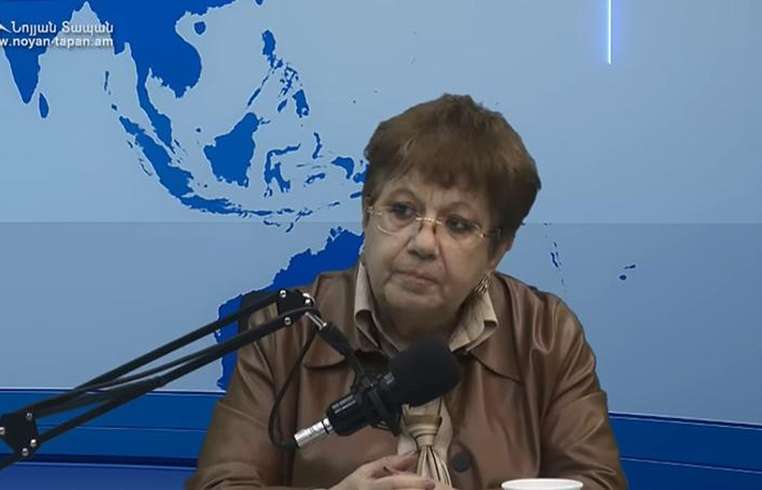
The Middle East finds itself at a pivotal moment as fresh hostilities erupt in Iran as of March 1st. This has profound implications for regional security, with the landscape undergoing significant changes. In a detailed discussion hosted by Noyan Tapan, Anahit Adamyan—a publicist and member of the Political Council of Armenia's 'Republic' Party—explored the potential ramifications for Armenia and outlined prospective paths for its neighboring Iran. Adamyan views the reported demise of Iran's Supreme Leader as a trigger for systemic upheaval. Speculation suggests Mojtaba Khamenei has been appointed as his successor, a move she criticizes as regressive, likening it to a return to Iran's monarchical roots. The lack of formal confirmation may be a 'defensive measure' due to Israel's stance on targeting successors perpetuating current policies. For Armenia, Iran's future trajectory is critical, not only for border security but also for sustaining long-term economic and political stability. Adamyan argues Armenia's core interests align with Iran's evolution into a 'developing, sanction-free secular state collaborating with the United States.' This scenario could neutralize destabilizing proxies like Hamas, Hezbollah, and the Houthis, fostering regional stability. She warns that this conflict's complexities are deep-rooted, suggesting prolonged instability. Adamyan outlines three potential scenarios for Iran: 1. Hardliner Dominance: Reactionary elements securing power through anti-U.S. and anti-Israel stances. 2. Secular Shift: Possible leadership by President Masoud Pezeshkian alongside progressives urging gradual secular reforms, potentially reintroducing Reza Pahlavi for a transitional period. 3. Civil War: The bleakest outcome involves the nation devolving into internal chaos, a situation to be avoided at all costs. She critiques the myth of 'saviors' like Russia and China, stressing Armenia's need to focus on strengthening modern alliances. Citing Russia's historical failures, Adamyan argues against dependence on external guarantees that don't align with Armenia's sovereignty aspirations. On domestic matters, she addresses Armenia's upcoming elections and supports a shift towards a presidential system, advocating policies that promise genuine development over empty rhetoric. Furthermore, she defends recent actions against foreign manipulators disguised as journalists, stressing that true democracy doesn't equate to unrestricted foreign influence. As tensions in Iran cast a shadow over the region, Adamyan's insights underscore the need for clear strategic priorities in Armenia, emphasizing an independent path forward disconnected from unreliable global powers.
About usyoo

Categories
Tags