
News - Trump Announces New Global Tariffs Following Court Setback
Business Strategy
Trump Announces New Global Tariffs Following Court Setback
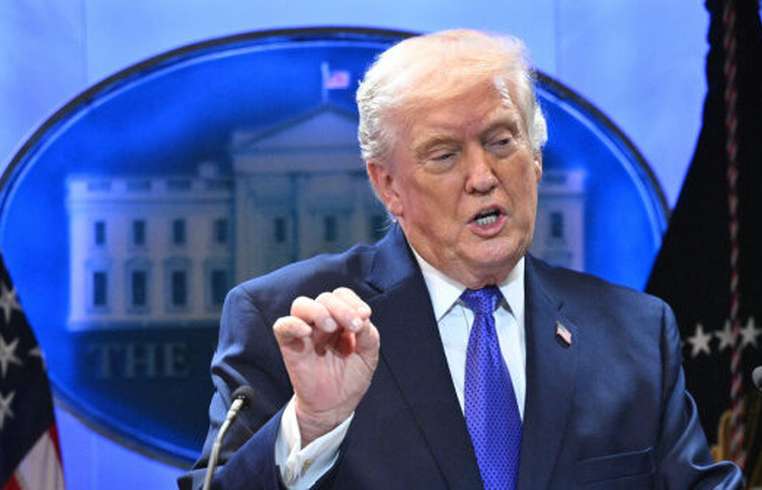
In a move that has reignited debates over executive economic authority, President Donald Trump announced a new global 10% tariff on all countries, following a Supreme Court decision that invalidated his previous tariff regime under the International Emergency Economic Powers Act (IEEPA). Claiming to bolster the U.S. economy by addressing trade imbalances and incentivizing domestic production, the tariffs, executed under Section 122 of the Trade Act of 1974, are set to take effect on February 24. Trump declared, "It is my Great Honor to have just signed, from the Oval Office, a Global 10% Tariff on all Countries, which will be effective almost immediately." The action aims to staunch the outflow of U.S. dollars and create incentives for local production, promising to rectify the balance-of-payments deficit while potentially creating jobs and reducing consumer costs. This policy shift follows a Supreme Court decision, which struck down Trump's previous use of sweeping tariffs, marking a significant judicial check on his economic strategies. While Trump had aimed to curtail foreign imports citing national security and trade imbalances under the IEEPA, the Court's ruling stipulated congressional approval for such wide-ranging measures. The Court's ruling saw dissent from Justices Brett Kavanaugh, Clarence Thomas, and Samuel Alito, with Kavanaugh suggesting potential legal pathways for future tariffs through other statutes like the Trade Expansion Act of 1962 or the Trade Act of 1974. Despite the setback, President Trump reaffirmed his commitment to imposing the new tariffs under Section 122, an action unsupported by the IEEPA's emergency statute. While the initial reaction from international trading partners remains unclear, the proclamation indicates a continued emphasis on reshaping global trade dynamics to favor U.S. interests. The impact of this decision remains to be seen as global markets and diplomatic relations navigate the ramifications of these tariffs. Trade relationships, particularly with key partners like Canada, Mexico, and China, remain in a precarious balance, potentially reshaping international economic strategies for years to come.
About usyoo

Categories
Tags