News - The debate over voter ID has sparked accusations of bias and hysteria.
Business Strategy
The debate over voter ID has sparked accusations of bias and hysteria.
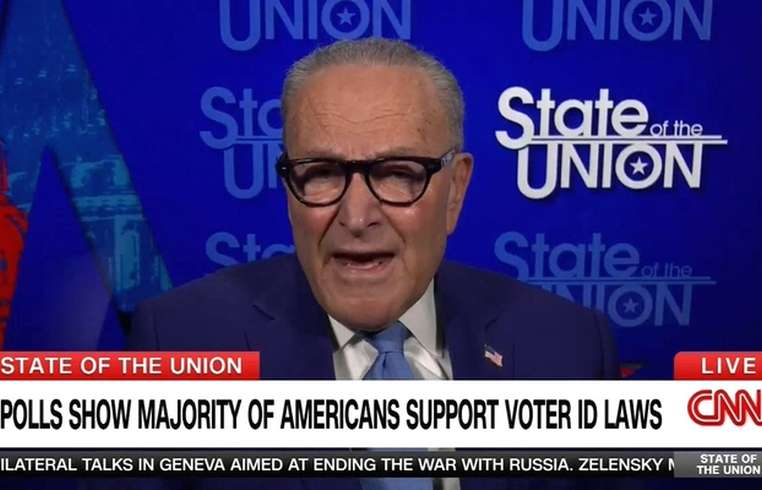
The contentious debate over voter ID requirements in the U.S. has reached new heights following the passage of the 'SAVE Act' by House Republicans, which mandates proof of citizenship for first-time voter registration. Despite the act's support among a significant portion of Americans—84% are in favor of requiring photo ID at polling stations—Democrats stand largely opposed, with Senate Minority Leader Chuck Schumer likening the legislation to 'Jim Crow 2.0.' This derogatory comparison draws criticisms for undermining the real historical context of racial discrimination. In the media, networks like CNN have been accused of propagating this narrative, as highlighted by a CNN political correspondent who remarked on the largely unified stance of Democrats, with only a few outliers like Senator John Fetterman deviating from the mainstream party line. Meanwhile, groups identifying as 'independent fact-checkers'—such as PolitiFact—face scrutiny for not addressing these claims critically. Critics argue that these institutions, which ought to be impartial, exhibit partiality by dismissing GOP concerns about voting integrity while failing to fact-check Democrats' 'Jim Crow' assertions. The discourse has stirred further cultural comparisons, with voices like Rep. Bryan Steil questioning the irony of stricter ID requirements for alcohol purchases compared to voting—a claim met with mixed responses. Some argue that voting, a fundamental public right, should indeed demand high scrutiny. However, critics from the academia and legal fields rebuff such parallels, emphasizing differences between voter fraud rarity and underage drinking. As accusations fly, questions about the role of media and fact-checkers in fostering or hindering civic understanding remain at the forefront of public dialogue.
About usyoo

Categories
Tags