News - Unveiling Triumphs and Challenges of the 2026 Australian Open
Business Strategy
Unveiling Triumphs and Challenges of the 2026 Australian Open
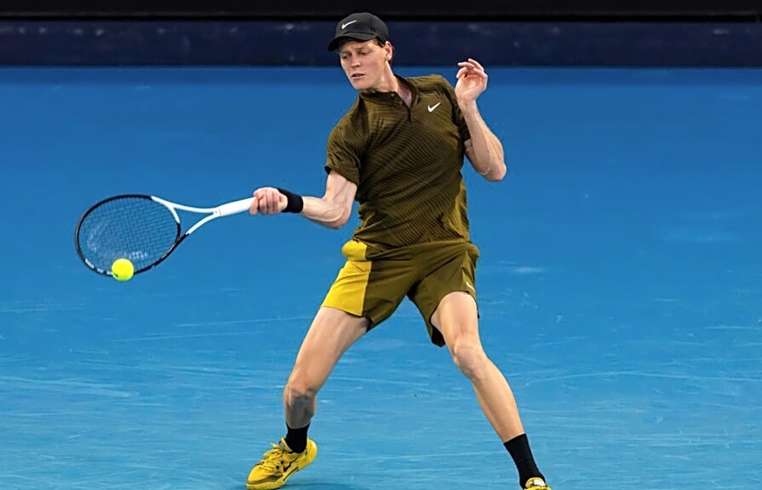
The 2026 Australian Open may have concluded, but the stories and statistics it generated remain as insightful as the matches themselves. Aside from Carlos Alcaraz's remarkable performance, further fortified by a marathon five-hour and twenty-seven-minute semifinal win against Alexander Zverev, and Novak Djokovic's pivotal win over Jannik Sinner, a closer look at the numbers reveals fascinating narratives. Start with the longest match: Alcaraz versus Zverev, clocking in as the third-longest in tournament history, ended with a twist of fate favoring Alcaraz despite Zverev's strong showing. Meanwhile, the shortest match between Reilly Opelka and Nicolai Budkov Kjaer, culminating in a swift ninety-one minutes, demonstrated a different kind of domination through Opelka's towering ace delivery. Opelka reappears in the stats, this time in a titanic battle against Alejandro Davidovich Fokina, where they combined for 49 aces over five sets. But even his extraordinary 40 aces against Alexandre Muller could not secure victory, underscoring tennis's complex balance of power and precision. The seesaw match between Tomas Machac and Lorenzo Musetti highlighted the gritty competitiveness of the Open with a staggering 41 break points. Similarly, matches like Alexander Bublik versus Tomas Martin Etcheverry, with a 75% service point win rate, and Fabian Marozsan against Kamil Majchrzak, capturing 45% of return points, showcased high-stakes versatility on both serve and return fronts. Individual stars like Novak Djokovic and Carlos Alcaraz further left their mark with exceptional performances. Djokovic dominated his serve with a 91% point win rate, while Alcaraz’s return play was exemplary, winning 52% of return points against Corentin Moutet. Behind these stats lies a story of resilience, determination, and the relentless pursuit of tennis glory at the Australian Open 2026, making it an event both exhilarating and memorable by the numbers.
About usyoo

Categories
Tags