News - The Senate is facing a funding crisis amid intense debates.
Business Strategy
The Senate is facing a funding crisis amid intense debates.
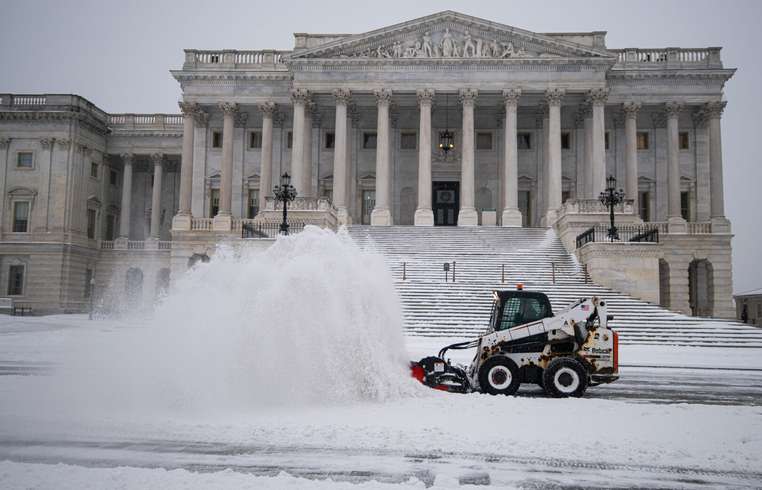
This week, as snowfall subsides in Washington D.C., the Senate finds itself immersed in critical negotiations to prevent a potential partial government shutdown. Following a federal incident in Minneapolis where agents killed a resident, bipartisan support for six essential appropriation bills, notably the Department of Homeland Security (DHS) funding, has disintegrated. Senate Minority Leader Charles E. Schumer of New York insists that any advancement requires an overhaul of the DHS bill to reflect shared values. This rift places immense pressure on Capitol Hill, given that the House has already cleared its version of the bills and is not scheduled to reconvene this week, intensifying the urgency. Amid this backdrop, broader legislative efforts continue. A contentious education bill, targeting rights and resources for pregnant students, awaits its fate in the Senate, facing allegations from Democrats of inadequate student support. Simultaneously, the Foreign Relations Committee prepares for Secretary of State Marco Rubio's pivotal testimony on U.S. actions in Venezuela, focusing on strategic moves following the controversial raid and capture of the country's former leader, Nicolás Maduro. This session also serves as a platform to re-evaluate U.S.-Venezuela diplomatic strategies. On the domestic front, financial landscapes are under scrutiny as the Senate Agriculture, Nutrition and Forestry Committee advances discussions on digital currency infrastructures. This includes a notable bipartisan amendment aiming to stimulate competition among credit card issuers to lower consumer fees, a proposal backed by President Trump. As the Senate endeavors to manage these multifaceted challenges, the looming prospect of a government shutdown adds another layer of complexity to a week already packed with legislative hurdles.
About usyoo

Categories
Tags