News - Honeyguides and Hunters: A Sweet Symbiosis in Mozambique
Business Strategy
Honeyguides and Hunters: A Sweet Symbiosis in Mozambique
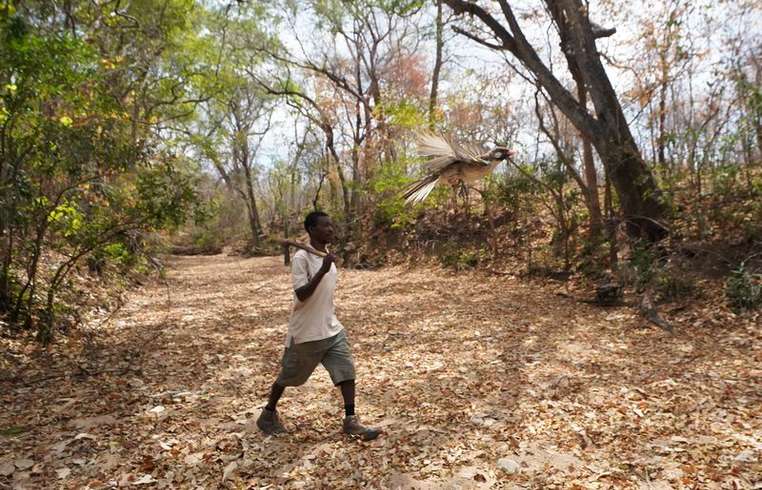
In the lush landscapes of northern Mozambique, an extraordinary partnership thrives between human honey-hunters and the wild honeyguide birds. This collaboration, steeped in ancient tradition, involves the honey-hunters using distinct vocal signals not only to attract but also to coordinate with their avian allies in locating and harvesting honey. At the heart of this cooperative endeavor is the greater honeyguide (Indicator indicator), a small bird with a significant role: guiding hunters to hidden bees' nests. The Niassa Special Reserve, sprawling across 42,000 square kilometers, is a hub for this unique interplay. Here, the honeyguides locate the nests with their keen bird’s-eye view, while the honey-hunters employ specialized tools to access the honey, leaving behind wax and larvae for the birds—a mutualistic exchange benefiting both parties. Research spearheaded by behavioral ecologist Jessica van der Wal has delved into this fascinating dynamic, revealing that vocal signals used by honey-hunters vary among different villages. Through recordings of 131 hunters from 13 villages, it was found that these calls feature distinctive combinations of shrill whoops, low trills, and grunts. The variation increases with geographical distance between communities, akin to human dialects. An intriguing aspect of this partnership is the adaptability of human participants. If hunters relocate to new areas, they adopt the local calls, optimizing their harvest by aligning with established successful practices. As van der Wal notes, embracing the efficient calls of a village promotes better honey yields, an adaptive trait of cultural transmission. Despite these human language differences, the honeyguides demonstrate a remarkable consistency in cooperation, promptly learning new dialects introduced by hunters. This flexibility suggests an evolutionary advantage that strengthens mutualism. Notably, Judith Bronstein of the University of Arizona underscores the importance of this study as it highlights the adaptability and enduring nature of mutualistic relationships thanks to learned behaviors and evolved traits. The research sheds light on the broader implications of human-animal mutualism, emphasizing its resilience and capacity for adaptation in diverse cultural and environmental frameworks. As call variations continue to evolve across generations, this study provides a rare glimpse into a cooperative dance that has persisted over time—an enduring testament to the symbiotic bond between humanity and the natural world.
About usyoo

Categories
Tags