
News - North Korea's Nuclear-Powered Submarine Sparks Regional Tensions
Business Strategy
North Korea's Nuclear-Powered Submarine Sparks Regional Tensions
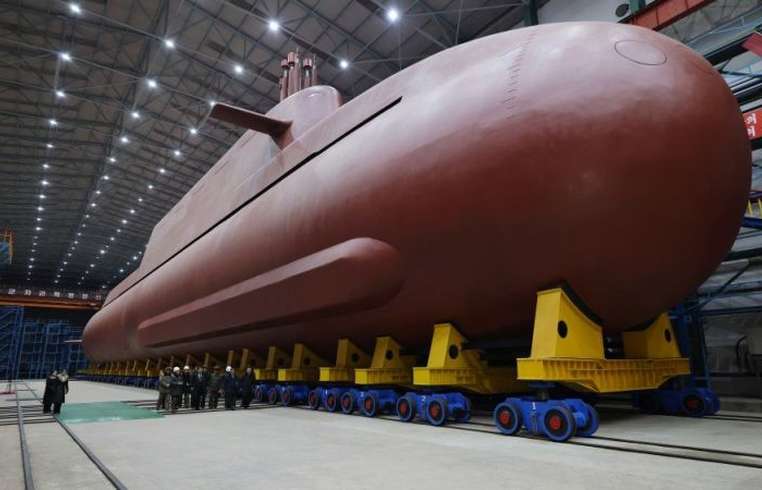
In a bold display of military advancement, North Korea has unveiled new images of its purported first nuclear-powered submarine, attracting global attention and increasing regional tensions. The vessel, shown in photographs with leader Kim Jong Un at an indoor facility, underscores Pyongyang's commitment to enhancing its maritime capabilities. Building a nuclear-powered submarine has been a strategic objective for Kim, a vision he articulated during a party congress in 2021. This development comes at a time when rival South Korea is also pursuing similar advancements, having recently received tacit approval from the U.S. to explore nuclear-powered submarine technology. Nuclear submarines, unlike their conventional counterparts, can remain submerged for extensive durations, providing strategic advantages in stealth and speed. Currently, such technological mastery is limited to a select group of nations including the USA, Russia, and China. North Korea's sub reportedly matches the size and capabilities of some U.S. attack submarines. Pyongyang views this as vital to its defense posture, asserting the necessity of a powerful offensive capability as a deterrent. However, the move escalates the existing arms race on the Korean Peninsula. Observers like Leif-Eric Easley from Ewha Womans University, Seoul, argue that North Korea is culpable for amplifying regional instability through such military pursuits. Efforts to boost its arsenal include missile systems capable of reaching the U.S., hypersonic technologies, and naval destroyers. Despite these advancements, analysts express skepticism about North Korea's ability to match South Korea's superior naval technology. South Korea, despite past restrictions on its nuclear submarine program due to agreements with the U.S., is catching up, albeit at a slower pace than North Korea. Any future missile tests conducted by North Korea could further heighten tensions in the region. Meanwhile, images from the unveiling showed Kim was accompanied by his daughter, hinting at the grooming of a potential successor. These developments not only reflect North Korea's strategic intentions but also highlight the ongoing military competition in East Asia, raising concerns over future stability.
About usyoo

Categories
Tags