
News - Armenian–Japanese friendship in the language of dance
Business Strategy
Armenian–Japanese friendship in the language of dance
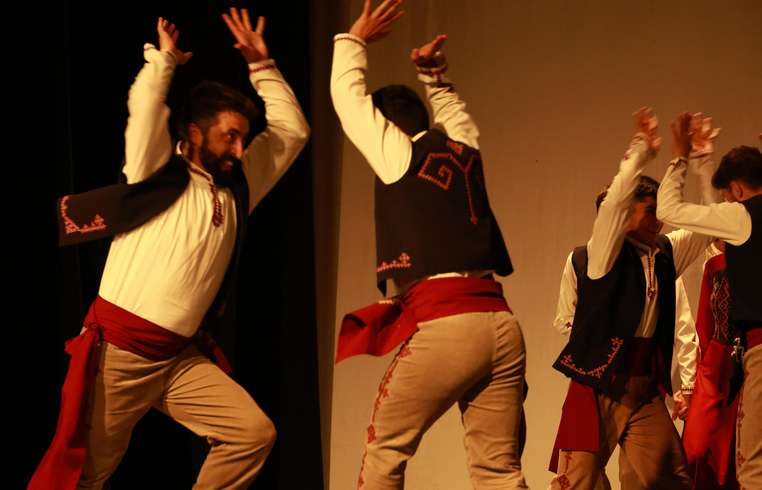
Sona Danielian 'We' is a traditional dance group with branches in Japan and the Armenian dance of the Japanese. 'Yarhush'ta' is the war/military dance of the Armenian population of Mush and Sassun in Western Armenia, traditionally danced by men. The dance's name has various interpretations. One is that 'Yarhush'ta' means a friend of arms. From Persian, the word 'yar' means friend, and 'khisht'/'khishtik' — a short spear, a weapon. During the dance, the way hands are held, the positions and formations continually change. The number of dancers should be even. They split into two groups, one attacking, the other defending. The hands are free, with movements forward and backward, to the right and left, and they clap. Facing each other they raise their hands above their heads and strike each other with the palms, symbolizing the clashing of weapons. The tempo of the movements gradually speeds up, and the claps become sharper. The ardent performance of Armenian Yarhush'ta by Japanese youths has spread widely on the Internet and continues to gather views. Few, however, are aware that these Japanese who popularize and disseminate the Armenian dance are students of one of Armenia's national traditional dance groups—the Japanese branch of the Armenian folk dance group 'Menq', the 'Menq Japan' Armenian Folk Dance Group. In the land of the rising sun, 'We' has two branches: one in Tokyo and the other in Kyoto. The 13-year-old 'We' group began collaborating with Japanese specialists last year after the National Federation of Folk Dances of Japan initiated sending musicians and dance instructors to Armenia to learn Armenian national dances and to disseminate them in Japan. The group hosted them for two weeks, in accordance with Armenian hospitality rules. For half a month the Armenian side worked with the Japanese dance instructors and musicians, teaching them more than 20 Armenian ethnodances. Armenian specialists filmed 13 dances as a guide for their Japanese colleagues. These recordings not only teach the movements but also convey the dances' history, strength, inner content and meaning. The musicians of 'Kait Art' production, Grigor Kartashyan and Grigor Davtyan, have also organized master classes in percussion and wind instruments for Japanese musicians interested in Armenian duduk, zurna and flute. Representatives of 'We' have not only made their guests familiar with Armenian dance rhythms and movements but also with Armenia's historic sites, its millennia-old cuisine and its stunning nature. 'We' have held historical conversations so that they gain a complete picture of the Armenian people and to deepen their understanding of where Armenian dances come from, who carries these dances, and who is the people that creates such dances. I think they will thus have a more complete picture of Armenian dances and the Armenian people, and will understand the essence of Armenian dances more deeply,' notes Stepan Toroyan, executive director of the NGO 'We'. He adds that from the Japanese people's viewing of Armenian dances, it's clear they have understood our dances' psychology quite well. It's notable that the Japanese have been interested in Armenian dances since the 1990s, when the American-based ethnographer Tom Bozikian was regularly invited to Japan to teach Armenian dances to interested Japanese. But since last year the National Federation of Folk Dances of Japan decided to import Armenian dance into Japan, from the homeland of the culture. That's why Armenian dances and dance rhythms are learned directly from Armenian specialists and their instructors are dispatched to them. This began a new wave of Armenian–Japanese 'dance cooperation', giving Armenian dance a fresh breath and a new path to recognition. Hundreds of Japanese have begun to explore Armenian ethnodances with renewed energy. 'We' plans to make reciprocal visits to Japan soon to meet with the Federation's leadership, deepen cooperation, and raise the standard. This was recently announced by the head of 'We' on ATV's morning program. Stepan Toroyan highlights the importance of live contact with Japanese Armenian-dance lovers, and that the visit to Japan should promote this contact. He says that in Japan, located about 8,000 kilometers from Armenia, there are quite a few Armenian-dance lovers, both young and old. Over the past year, thanks to the two branches of 'We', the number of Armenian-dance-loving Japanese people has increased, and Armenian dancing has become more recognizable. I asked Stepan, in his professional view, how do the Japanese perform Armenian dances. He replied: 'The youth dancing in Tokyo are quite good; those young men who dance Yarhush'ta—the famous videos, you’ve probably seen—dance very well. There is, of course, a Japanese handwriting and composition to it, but I think they have largely managed to express the same Armenian spirit. My colleagues, and my Sasunian friends who watched that video, said that the Sasun spirit is fully present and will develop with Sasun's spirit.' In the professional's view, the Japanese enjoy dancing Armenian dances. What draws the Japanese to Armenian dance? There is no single definitive answer or factor, says Stepan Toroyan, but we nevertheless share certain similarities with the Japanese people, which explain their interest in Armenian dances. Besides, Armenian national dances have spread widely in recent years and are now known in various countries. Major events are held in Yerevan and in the provinces, with thousands of people participating in Armenian ethnodances. There are many blogs urging tourists to be in Armenia for those days and enjoy Armenian national dance, becoming part of the 'dance circle'. The founder of 'We' notes that these promotions have also helped Japanese dance enthusiasts to start dancing Armenian dances. Armenian national dance has the power to unite, to bring together, to form a community and a family. Perhaps all societies have a need to rally around such unity, and perhaps this explains foreigners' interest in Armenian dances—hand in hand, shoulder to shoulder, clap after clap. This is a topic for deep analysis and study, the interviewee adds: 'Armenian dances undoubtedly have the power to unite people. I think in developed countries, where emphasis is placed on the strong individual, the strong citizen, society aims to cultivate strong individuals, yet many people need not only to be strong but to have friends, close people, like-minded folks. Being strong can be exhausting over time, and it is better when, through culture, they can gather, befriend, and recharge from daily life. In this sense, Armenian dances are very effective.' Armenian dance as the foundation of Armenia–Japan friendship Relations between peoples are hardly ever built on political grounds. If nations feel close, have mutual interests and friendly ties, it is easier to establish political relations. In this sense, cultural cooperation can provide a strong boost to Armenian–Japanese political and economic ties. Today, Armenia and Japan host Armenian–Japanese friendship associations and organizations that promote the cultures of the two peoples and strengthen historical-cultural links. In this context, dance carries a powerful message, because the thing that most quickly makes people feel close is dance.
About usyoo

Categories
Tags