News - Proposed High-Speed Rail to Transform Delhi-Mumbai Travel
Business Strategy
Proposed High-Speed Rail to Transform Delhi-Mumbai Travel
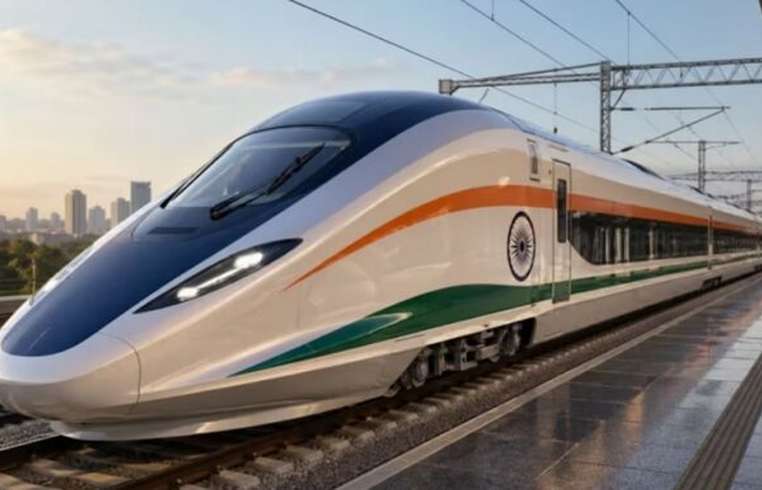
The prospect of a groundbreaking high-speed rail linking Delhi to Ahmedabad, with a subsequent extension to Mumbai, is currently under evaluation. This ambitious infrastructure project promises to reduce travel time significantly, from the existing 14-hour journey to approximately six hours over a nearly 1,400 km distance. Planning is underway for the Delhi-Ahmedabad section, which comprises about 886 km of the wider route, designed as an augmentation of the Mumbai-Ahmedabad high-speed railway already in development. A total of fifteen stations, including key urban centers like Jaipur, Ajmer, and Udaipur, are proposed along this elevated line, which aims to integrate existing road and rail corridors to limit land acquisition needs. Despite not being covered in the Union Budget 2026-27 amidst the announcement of seven new high-speed routes, the initiative's feasibility study by the National High Speed Rail Corporation Limited remains pivotal. The focal point is minimizing land disruptions while optimizing connectivity, particularly for a route passing through Haryana, Rajasthan, and Gujarat. Parallelly in progress is the indigenous B28 bullet train, constructed at BEML's Bengaluru facility, and destined for the Mumbai-Ahmedabad section. Showcasing India's engineering prowess, the B28 promises to operate at speeds up to 280 km/h, reinforcing the nation’s goals of producing advanced rail transport solutions. Railway Minister Ashwini Vaishnaw's broadcast of the B28’s development footage captures the public's imagination, aligning with India’s emphasis on self-reliance and cutting-edge technology in infrastructure projects.
About usyoo

Categories
Tags