News - EAEU Customs Meeting Concludes with Strategic Decisions
Business Strategy
EAEU Customs Meeting Concludes with Strategic Decisions
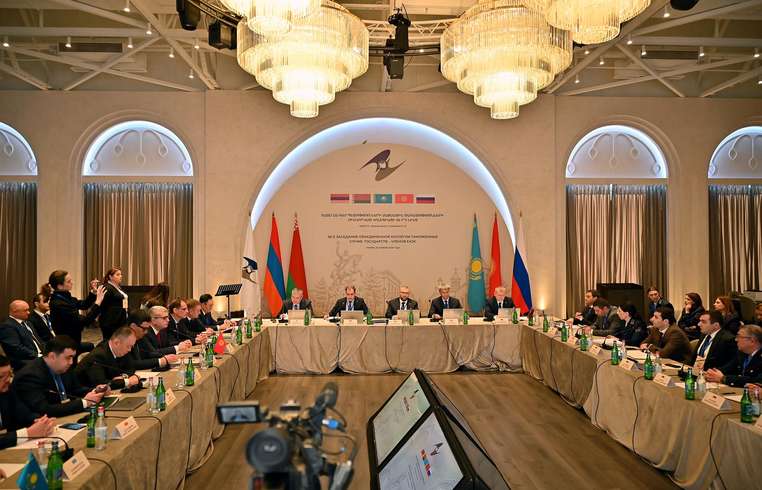
The 56th meeting of the united board of customs services from the Eurasian Economic Union (EAEU) member states took place in Gyumri, Armenia, from November 18-20. Key figures from Armenia, Russia, Belarus, Kazakhstan, and Kyrgyzstan participated in this significant event. Eduard Hakobyan, Chairman of Armenia's State Revenue Committee, expressed optimism about the collective ability to tackle challenges within customs cooperation. Throughout the meeting, 21 critical decisions were made to enhance collaboration and address pressing issues in customs operations. The meeting showcased an engaged and proactive approach from all participating delegations, reflecting a commitment to smoothing the path of economic exchange and cooperation between EAEU countries. The discussions focused on improving the efficiency and transparency of customs procedures, aligning practices across nations, and facilitating smoother trade flows. Hakobyan underscored the importance of these gatherings, emphasizing the role they play in breaking down barriers that hamper trade and economic growth within the union. He noted that the shared commitment to progress and efficiency across the EAEU is crucial for attaining collective economic goals. A highlight of the meeting was the election of Eduard Hakobyan for another year as deputy chairman of the board. This decision was seen as a vote of confidence in his leadership and vision for driving forward the customs agenda, as his strategies and insights have been instrumental in fostering a more unified customs framework. The board's resolutions cover a range of topics critical to the EAEU's customs union, including technological upgrades, improvement in customs logistics, and the harmonization of policies to minimize discrepancies in customs interpretations and implementations. Representatives reiterated their dedication to continual adaptation and reform, recognizing the fast-paced evolution of international trade challenges. In conclusion, the 56th EAEU customs board meeting was a pivotal moment for future cooperation, with its outcomes expected to bring long-term benefits for the members' economies, streamlining customs interactions and promoting a truly integrated economic space.
About usyoo

Categories
Tags