News - Legendary Space Telescope Returns to Earth After 22-Year Mission
Business Strategy
Legendary Space Telescope Returns to Earth After 22-Year Mission
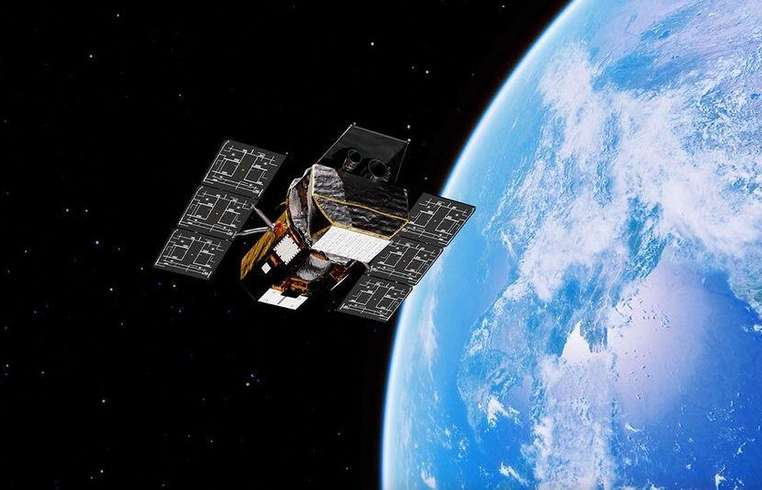
In a significant event for space exploration, NASA's Swift Observatory has concluded its remarkable 22-year mission, re-entering Earth's atmosphere early in the morning over Indonesia's North Sumatra region. Designed to study cosmic phenomena such as gamma-ray bursts and supernovas, the 1.5-ton telescope was launched in 2004. Despite surpassing its original two-year mission time, the telescope has been a stalwart in monitoring and providing crucial data on various cosmic events, including issuing critical alerts for further examination by the Hubble and Webb telescopes. Swift Observatory's journey back to Earth was not unexpected. NASA and the U.S. Space Force meticulously tracked its descent, occurring at 7:39 a.m. ET on November 4. Much of the observatory disintegrated upon reentry, with remaining fragments potentially scattered widely, but NASA reassured the public that the odds of any harm were minimal. The telescope, famed for its rapid response capability, played a pivotal role in enhancing our understanding of gamma-ray bursts, supernovas, and other cosmic occurrences. Its ability to swiftly adjust to observe these events earned it accolades in the scientific community. Over its operational tenure, Swift has observed more than 2,000 gamma-ray bursts and countless other cosmic phenomena. Plans by NASA to extend the observatory's operational life proved challenging. A collaboration with Katalyst Space to use a specially designed robot called Link to stabilize the telescope fell short when the robot couldn't reach the observatory. The robot's failure in mid-air and subsequent fall back to Earth in September marked a shift in strategy, and by August, NASA had moved towards a planned reentry for the observatory. Despite its dramatic end, the Swift Observatory's legacy endures. The scientific insights and data derived from its missions have broadened humanity's comprehension of the universe's mysteries, from the activities of supermassive black holes to the study of near-Earth phenomena like comets. Reflecting on the mission, astronomer John Nousek of Pennsylvania State University, a leading member of the observatory’s control team, expressed admiration and hope. He noted the mission's success and its contribution to the scientific community while acknowledging the inevitability of its end in low-Earth orbit. Moving forward, the hope is to leverage lessons from Swift to guide future space missions and continue the quest for cosmic exploration.
About usyoo

Categories
Tags