News - Senate races in conservative strongholds too close to call
Business Strategy
Senate races in conservative strongholds too close to call
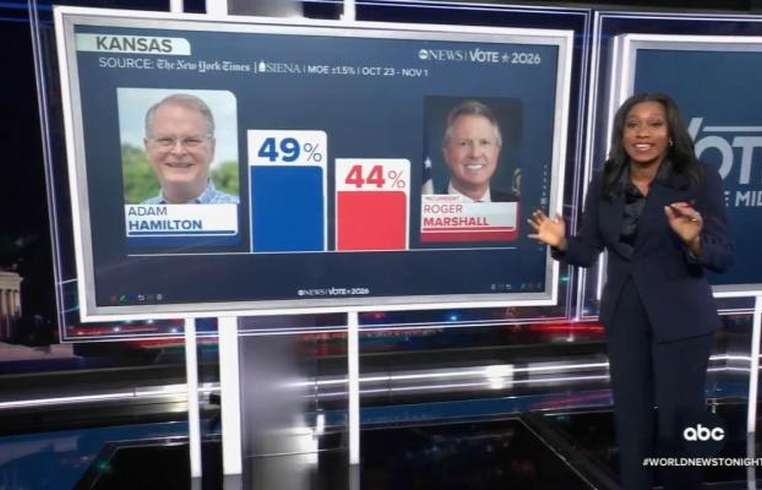
In an unexpected twist, several key Senate races in traditionally Republican-dominated states have become highly competitive just ahead of Election Day. Historically, these deep red states have leaned heavily towards Republican candidates, making the current polling data a significant departure from the norm. In Maine, Democrat Troy Jackson is leading with 51%, outpacing Republican incumbent Senator Susan Collins, who holds 45%. Meanwhile, in Michigan, Abdul el-Sayed maintains a strong 53% against Republican Mike Rogers, who trails at 42%. The spotlight in Ohio shines on former Senator Sherrod Brown, achieving 49% against the incumbent Republican Jon Husted's 44%. The tightest race appears to be taking place in Iowa, where Democrat Josh Turek and Republican Ashley Hinson are in a statistical tie, registering 48% and 47% respectively. Perhaps the most surprising battleground is Texas, where Democrat James Talarico is polling at 50%, ahead of Republican Texas Attorney General Ken Paxton at 43%. Also making waves is Democrat Adam Hamilton, who polls at 49%, leading over the incumbent Roger Marshall in Texas, another unexpected shift given the state's traditional stance. This election is poised to be significantly influenced by voter concerns over economic issues, notably the record-high fuel costs that remain a significant burden. Gasoline prices are reaching an unprecedented $4.14 per gallon, with diesel not far behind at $6.29 per gallon, potentially marking the steepest fuel costs on record for an Election Day. These polling numbers are delivering a nail-biting edge to what is shaping up to be a very different midterm election. Although some races remain within the polling margin of error, which introduces potential uncertainties, they reflect a fundamental shift in voter sentiment that both parties would do well to consider. With the stakes so high and states showing potential to swing, the attention to turnout and voter engagement is paramount. ABC's World News Tonight will feature extensive coverage of these developments, with correspondents stationed across crucial states such as Alaska, Texas, Michigan, Ohio, South Carolina, and Maine, ready to provide insights and updates throughout the night. As the evening unfolds, the political landscape may be redrawn before our eyes with historical implications for the future balance of power.
About usyoo

Categories
Tags