News - Alphabet's Stock Tumbles: A Reality Check for Berkshire Hathaway's Big Bet
Business Strategy
Alphabet's Stock Tumbles: A Reality Check for Berkshire Hathaway's Big Bet
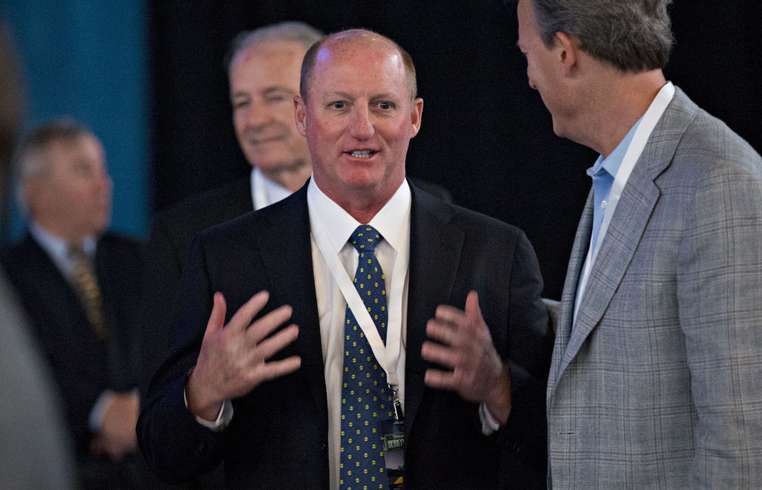
In just ten months as CEO of Berkshire Hathaway, Greg Abel made a bold move by heavily investing in Alphabet, boosting its position to the firm's top five holdings and comprising 8.2% of Berkshire's extensive $364 billion portfolio. However, Alphabet recently faced its steepest single-day stock decline in history, following mixed third-quarter results that startled investors and markets alike. On October 29, Alphabet's shares plummeted approximately 12.3%, a reaction to disappointing financial metrics that fell short of Wall Street's expectations. The tech giant reported adjusted earnings per share of $2.67, significantly less than the anticipated $3.02. Revenues, while climbing 25% year-over-year to $127.6 billion, still missed the mark compared to the $128.2 billion analysts projected. Although Alphabet's cloud revenue surged, fueled by increasing AI adoption, its free cash flow nosedived to over $9 billion, sharply contrasting with analyst projections of a $2.7 billion deficit. Scrutiny zeroed in on AI's growing encroachment on Alphabet's flagship search services, with revenues at $96.3 billion, more than $2 billion short of predictions. Further, the slowdown in search revenue growth—from 19% in Q1 to 12% in Q3—heightened concerns. The company's chief business officer, Philipp Schindler, highlighted the impact of AI Mode queries, which showed weaker monetization, raising alarms about potential erosion of its monopoly-like hold on the search market, previously at a sizable 90%. J.P. Morgan analyst Doug Anmuth emphasized the precarious position even giants like Alphabet face when substantial AI investments don't yield expected returns, highlighting the vulnerability of substantial free cash flow downturns. Despite being a prominent AI leader, Alphabet faces fierce competition in large language models. BNP Paribas analyst Nick Jones conveyed investor apprehension that AI agents could undermine Google's advertising revenues, performing tasks like online browsing and shopping autonomously. Investors are left questioning if even seasoned industry investors like Abel and Buffett have miscalculated. While a single rough quarter should not define the future, Alphabet maintains robust investments in emergent segments, including Google Cloud, YouTube, and Waymo. The Gemini AI models also retain significant market share. As AI rapidly evolves, investors must reassess Alphabet's prospects and strategic positioning in this new age. They should consider how AI will shape the future of search and whether it can generate substantial revenues longer term. This uncertainty prompts even titans like Berkshire Hathaway to ponder potential scenarios, pondering critical questions: If traditional search diminishes under AI's influence, what implications await? Will AI prove a financial catalyst or consistently challenging to monetize? As Alphabet's saga unfolds, the tech world and investors alike eagerly await the company's next moves in navigating these formidable challenges.
About usyoo

Categories
Tags