News - Ancient Secrets of Pompeii: Unearthing a First-Century Roman Home
Business Strategy
Ancient Secrets of Pompeii: Unearthing a First-Century Roman Home
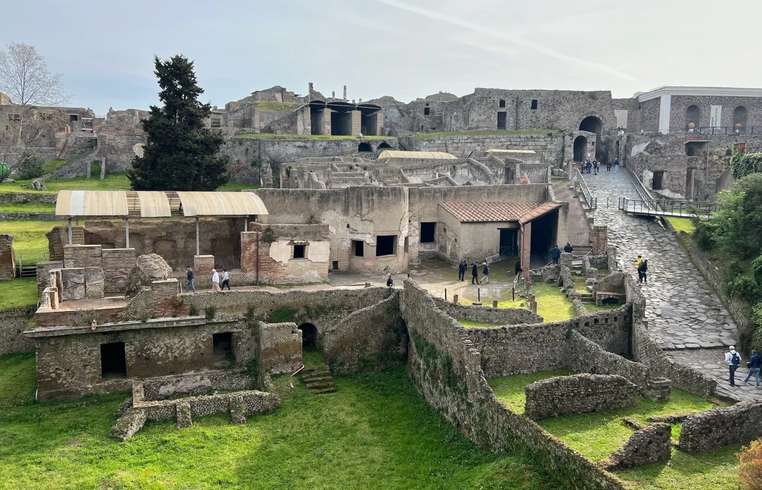
In a remarkable archaeological discovery, researchers have unearthed a wooden cabinet filled with personal belongings from the ruins of Pompeii, preserved since the catastrophic eruption of Mount Vesuvius in 79 AD. The cabinet, intricately crafted, contained a variety of everyday items, offering a fascinating glimpse into the lives of its Roman inhabitants. The artifacts found within include grooming tools, delicate glass bottles for perfumes, bronze coins, and an elegant oil lamp, each item shedding light on the daily practices and routines of the Romans. Perhaps most poignant is a child’s necklace featuring pendants of deities, a testament to familial bonds and spiritual beliefs of the era. This discovery, reported by The Guardian, not only unveils personal stories from the past but also highlights the potential economic activities of the residents, who might have been involved in trade. The rapid encapsulation of these objects in volcanic ash during Vesuvius's eruption suggests a hasty evacuation, with inhabitants fleeing for their lives, leaving behind treasured possessions. Current archaeological efforts in Pompeii aim to preserve and study such finds to reconstruct the socio-economic fabric of ancient Roman life. This latest find stands as a testament to the resilience of human history, locked in time for nearly two millennia. Continuing research in Pompeii and its environs enriches our understanding of Roman civilization, with each unearthed relic adding a new piece to the complex puzzle of our past. Such ongoing projects emphasize the importance of preserving historical sites, ensuring future generations can learn from and appreciate the rich tapestry of human history.
About usyoo

Categories
Tags