News - USC Launches Cutting-Edge Study on Bipolar Disorder Mechanisms
Business Strategy
USC Launches Cutting-Edge Study on Bipolar Disorder Mechanisms
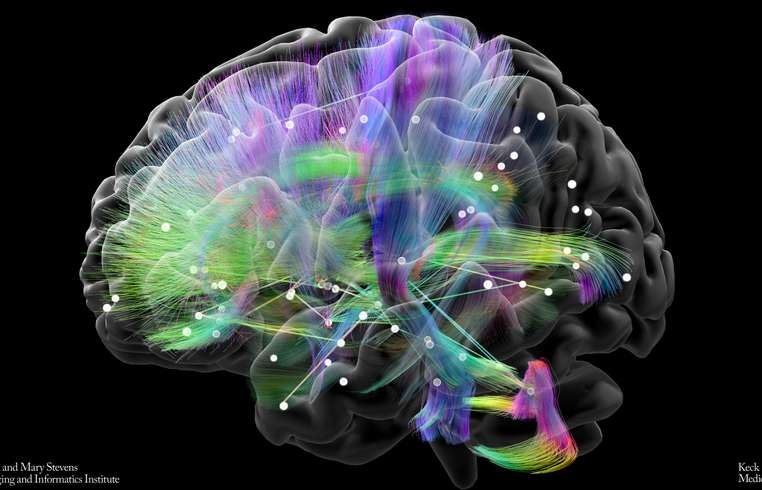
In an ambitious venture, researchers at the Keck School of Medicine's Mark and Mary Stevens Neuroimaging and Informatics Institute are engaging in a groundbreaking study to untangle the biological intricacies of bipolar disorder. This $4.5 million project, funded by the nonprofit Breakthrough Discoveries for thriving with Bipolar Disorder (BD²), aligns with their goal to explore brain cell interactions linked to mood transitions between mania and depression, core symptoms of the disorder. The collaborative research, spearheaded by assistant professor Christopher R.K. Ching, PhD and involving Stanford and Johns Hopkins researchers, aims to shed light on the often obscure mechanisms that underlie bipolar disorder's episodic nature. Affecting approximately 3% of the global population, bipolar disorder presents a complex tapestry of emotional fluctuations that remain challenging to diagnose and treat due to limited biological understanding. A focal point of this study is the retrosplenial cortex, a relatively underexplored brain area thought to play a critical role in mood regulation. Prior investigations revealed its cells, coined 'retrosplenial switch cells,' may be pivotal to psychiatric health, potentially influencing mood oscillations. By examining donated brain tissues, genetics, and neuroimages, the team aims to substantively enhance comprehension of these processes. The research will pursue molecular labeling to discern disparate cell types in affected versus unaffected brains, alongside genetic risk scoring to predict mood stability and therapeutic responses. Concurrently, brain imaging from the BD² network, consisting of 4,000 bipolar participants, will assess connectivity dynamics in the retrosplenial cortex and its broader neural associations. Led by the ENIGMA Bipolar Disorder Working Group, this international initiative synthesizes vast imaging and clinical databases, leveraging cutting-edge modeling to foster diagnostic advancements. As project contributor Melody Kang highlights, integrating diverse scientific disciplines is essential in devising actionable clinical strategies. This early-stage discovery, though not focused on treatment testing, aims to pinpoint specific neural regions and cellular dynamics implicated in bipolar mood transitions. By offering open data sharing, the project seeks to establish a foundational understanding ultimately benefitting patient care. Arthur W. Toga, PhD, emphasizes the study's ambition in bridging imaging, genetics, and cellular biology, amplifying the prospects of translating findings into real-world patient solutions. Such interdisciplinary synergy, enabled by BD²'s substantial funding, marks a promising leap toward effectively addressing the nuances of bipolar disorder.
About usyoo

Categories
Tags