

News - Apple's 'Live Rewind' Raises Privacy Concerns
Business Strategy
Apple's 'Live Rewind' Raises Privacy Concerns
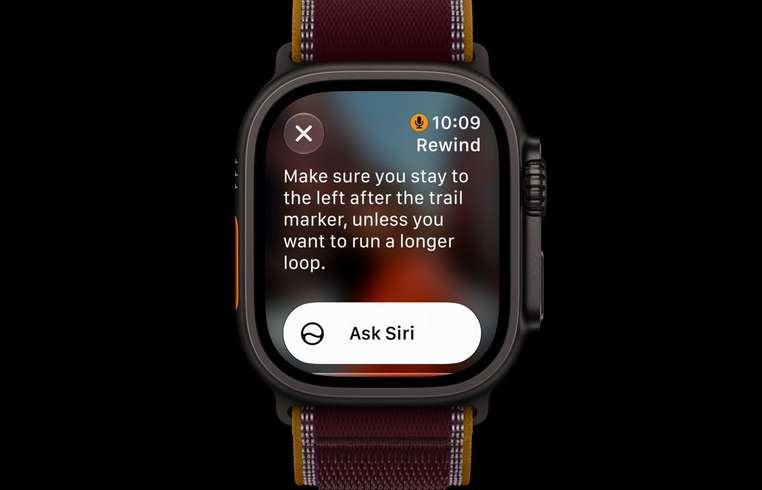
Apple has recently unveiled the innovative 'Live Rewind' feature in its newest Apple Watch Series 12 and Apple Watch Ultra 4 models, creating a buzz among technology enthusiasts. This feature allows users to capture the last 15 seconds of conversation and presents it as a text snippet on the watch's display. While the tech giant reassures users that no audio recordings are made or stored, and the transcripts do not identify speakers, several privacy and legal concerns are rising. The 'Live Rewind' function introduces new possibilities for users who may want to recall details like a conversation about daily menu specials at a restaurant, showcased in Apple's promotional video. To activate it, users need to double-press the watch's side button, which indicates it's in use by displaying a chime, a microphone icon, and a brief animation. While some users find the feature thrilling, even cheekily suggesting that it will make them more persuasive in discussions, others express serious privacy concerns. Experts warn about the potential legal implications of using such a feature. Donna Ballman, a retired employment attorney, describes the technology as a 'gray area,' predicting numerous litigations could stem from its usage. The key legal issue revolves around the need for explicit consent when conversations are recorded, even in transcript form. Users are advised to ensure that they have permission to 'record' before using 'Live Rewind.' Legal requirements vary, but as Ryan Stygar, another attorney, points out, relying solely on Apple's audio and visual cues for consent might not suffice. The debate extends to the ethical realm, questioning whether it's appropriate to record conversations even if it is legal. This latest offering by Apple draws parallels to controversies faced by Meta's AI-enhanced eyewear, which has been accused of infringing on privacy by surreptitiously recording people in social and work settings. These technologies challenge the traditional expectations of privacy, leading to uncomfortable sentiments around being monitored constantly. Thorin Klosowski, from the Electronic Frontier Foundation, highlights the potential breaches of basic social norms and expectations. The company suggests caution in using 'Live Rewind,' pointing out how sensitive information like financial data is excluded from features like Siri Recaps. Still, privacy experts argue that the lack of clear consent mechanisms is problematic. The broader implications of these technologies affect how society perceives privacy, consent, and monitoring. Apple's Live Rewind feature's release emphasizes the ongoing conversation about technology's role in our everyday privacy. The silent, perpetual recording of our words could redefine interaction norms, bringing the tension between technological advancement and personal privacy starkly into focus.
About usyoo

Categories
Tags