News - Early Mammals: Pioneers of Pair Bonding?
Business Strategy
Early Mammals: Pioneers of Pair Bonding?
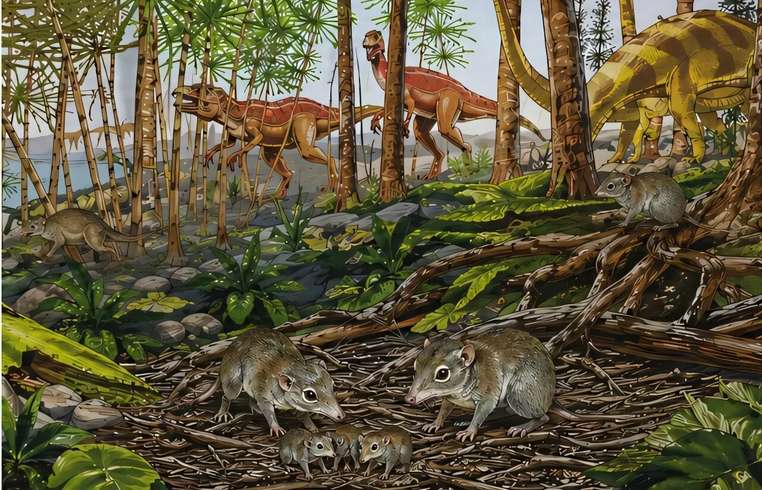
Diving into the depths of our evolutionary past, a groundbreaking study unveils that early placental mammals, the ancestors of numerous species including humans, might have pioneered the concept of social pair bonding. The research, published in the prestigious Proceedings of the National Academy of Sciences, examines how these ancient creatures could have established stable male-female pairs approximately 160 million years ago. This intricate study draws upon the behaviors observed in 5740 species of mammals and their closest relatives. By analyzing the social dynamics of existing mammalian species, researchers have outlined patterns suggesting that living in pairs might have been an adaptive strategy. Such an arrangement would have provided significant evolutionary advantages, such as enhanced offspring protection and increased chances of survival against predators. The comprehensive analysis spans data collected from over 15,000 scientific articles, spanning 806 different species that range from solitary to socially inclined mammals. Intriguingly, this notion stands in contrast to the widely held belief that these early mammals were predominantly solitary. The study posits that the development of pair-bonding behaviors might have set the stage for more complex social structures observed in later species. In understanding these early social behaviors, scientists have also shed light on the possible evolutionary pressures that led to the diversification of social structures in present-day mammals. This research opens a window into the past, challenging us to rethink our assumptions about the solitary lifestyle of our distant ancestors.
About usyoo

Categories
Tags