
News - Lawmakers Prevent Plan to Limit Supreme Court to Nine Justices
Business Strategy
Lawmakers Prevent Plan to Limit Supreme Court to Nine Justices
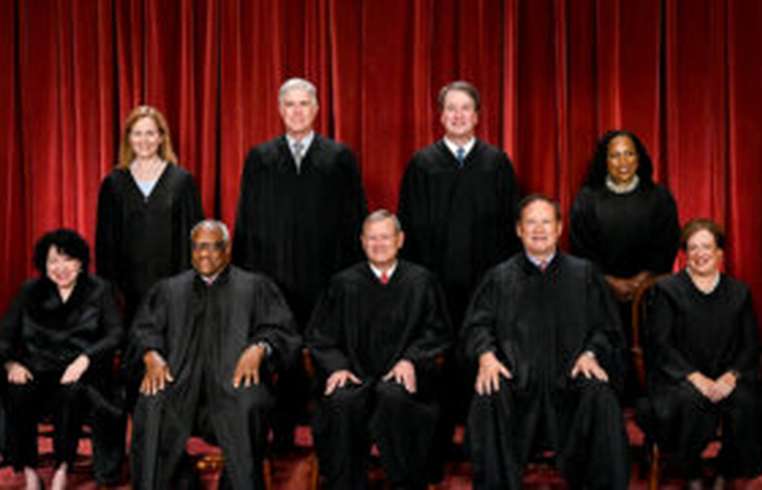
In a closely watched vote on September 2, the U.S. House of Representatives turned down a proposed constitutional amendment aimed at capping the number of Supreme Court justices at nine. The resolution, introduced by Rep. Andy Biggs (R-Ariz.), fell short of the two-thirds majority required to pass under suspended rules, with a final tally of 212-206. Only one Democrat crossed party lines to support the initiative. The proposed amendment sought to add a succinct, one-sentence clause to the Constitution: "The Supreme Court of the United States shall be composed of nine justices consisting of one chief justice and eight associate justices." The challenge of amending the Constitution is formidable, necessitating approval from two-thirds of both the House and the Senate, along with ratification by 38 state legislatures out of the 50. This push comes amid a heated debate where some Democrats have expressed interest in expanding the court to 13 justices, critiquing its conservative-leaning 6-3 balance and recent controversial rulings. Notable voices, such as House Minority Leader Hakeem Jeffries (D-N.Y.), have called for "dramatic reform" of the judiciary, indicating a willingness to explore various options. Prominent Democratic figures like Rep. Jim Clyburn (D-S.C.) have been vocal in suggesting the court's expansion, citing the changing political and social landscape as reasons for such acts. Asserting "thirteen is a pretty good number," Clyburn implied legislative action was necessary. Preceding the vote, discussions were charged with intensity, with Democrats lambasting the court's perceived favoritism in decisions impacting immigration, reproductive rights, and voting regulations. Criticism of the court's limitation on race as a factor in setting congressional maps added fuel, with Rep. Hank Johnson (D-Ga.) highlighting its negative implications for minority voting rights. The debate over court "packing" stretches back decades. In response to the landmark overturning of Roe v. Wade in 2023, efforts were renewed to advance legislation increasing judicial count. Advocates, like Rep. Jamie Raskin (D-Md.), argue the need for parallel representation between justices and appellate circuits. Historical context is underscored by the fact that congressional adjustments to court composition have occurred multiple times before settling on nine justices in 1869. Opposition from GOP members centered on concerns that expanding the court was a political tactic compromising judicial independence. A permanent nine-justice cap, they argue, safeguards against future partisan expansions aimed at shifting the court's ideological tilt. "Codifying the court's size prevents whimsical manipulation based on electoral outcomes," emphasized Biggs. His core argument is that a fixed number maintains the judiciary's credibility beyond the shifting sands of politicized agendas.
About usyoo

Categories
Tags