
News - US and South Korea Strengthen Ties Amid North Korea Tensions
Business Strategy
US and South Korea Strengthen Ties Amid North Korea Tensions
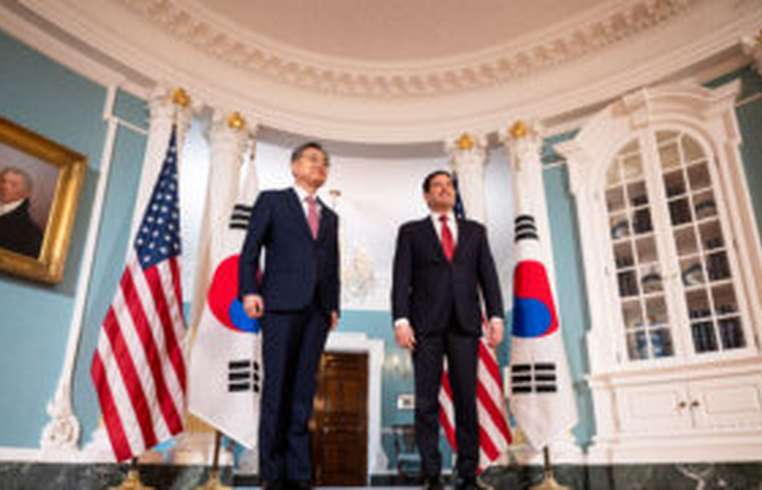
On August 24, U.S. Secretary of State Marco Rubio and South Korean Foreign Minister Cho Hyun held a pivotal telephone conversation, solidifying their commitment to closely coordinate on North Korea's nuclear issue and strive to preserve peace on the Korean Peninsula. The two leaders also explored various topics concerning the strong alliance between their nations, as highlighted by State Department spokesperson Tommy Pigott. South Korea's foreign ministry released a statement following the call, stressing the importance of reinforced communication between South Korea and the United States in light of evolving international dynamics. Both nations concurred on the necessity of enhancing mutual cooperation through beneficial resolutions in areas like tariffs, investment treaties, shipbuilding, and national security. Minister Cho assured that South Korea will exert all efforts to transform President Trump's latest overtures into renewed dialogue with North Korea, aiming to achieve lasting peace in the region. Trump's recent announcement revealed his intent to potentially meet North Korean leader Kim Jong Un by year's end, reflecting global apprehension over North Korea's advancing nuclear arsenal. Moreover, Rubio tackled Middle Eastern tensions by discussing U.S. initiatives in re-establishing peace, with particular focus on Iranian affairs. Cho reaffirmed South Korea's dedication to ensuring safe navigation through the Strait of Hormuz, a significant geopolitical choke point. The pair are slated to convene in person soon to continue deliberations on these pressing issues. Meanwhile, last week's developments also witnessed Trump's criticism of South Korea's reluctance to aid the U.S. in safeguarding the Strait amidst Iranian hostilities. Compounding this, Trump ordered a scaled-back annual military drill with South Korea, reducing its duration due to perceived intimidation towards North Korea. South Korean President Lee Jae Myung expressed cautious optimism following Trump's outreach to Kim, viewing it as a positive step toward overcoming regional animosity. Meanwhile, national defense officials reported that North Korea's latest missile tests involved 600-millimeter multiple rocket launchers, signaling a continued military threat. In a parallel diplomatic initiative, Chinese Foreign Minister Wang Yi pursued enhanced Sino-South Korean relations during an August 20 meeting in Seoul with President Lee. China's agenda comprised fostering strategic cooperation and proposing a potential leadership summit at the upcoming Asia-Pacific Economic Cooperation summit in Shenzhen. In commercial diplomacy, the U.S. State Department approved a potential sale valued at $125 million for AIM-9X Sidewinder missiles and associated equipment to South Korea. The transaction, managed by RTX Corporation, is seen as vital to maintaining political stability across the Indo-Pacific theatre, underscoring the intricate fabric of global alliances.
About usyoo

Categories
Tags