News - Armenian Parliament Aligns on Committee Leaders
Business Strategy
Armenian Parliament Aligns on Committee Leaders
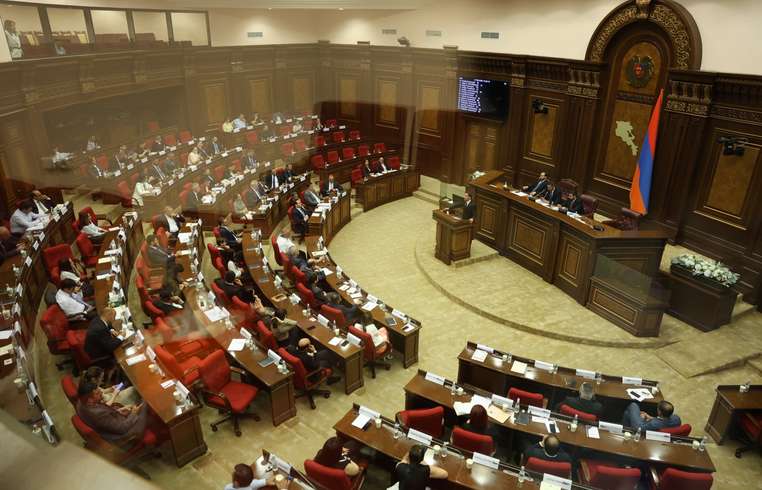
Armenia's National Assembly convened to deliberate the appointment of committee chairpersons, marking a significant step in structuring its legislative hierarchy. This pivotal session focused on the allocation of committee leadership roles, crucial to steering legislative directions in diverse policy sectors. The distribution adhered to the D'Hondt proportional representation method, a commonly utilized system in parliamentary procedures that ensures equitable representation based on electoral support. Under this system, the ruling 'Civil Contract' party secured chairmanships for eight committees, reflecting its robust mandate from recent elections. Opposition parties also maintained critical roles; 'Strong Armenia,' with its reformist agenda, was allocated three chairmanships, while the 'Armenia' alliance gained control over one. These chairmanships are set to guide committees on key issues including finance, defense, and human rights. Notably, the 'Strong Armenia' will oversee the Financial Instruments and Territorial Management Committees, emphasizing its focus on economic reforms and regional governance. The European Integration Committee, aimed at deepening ties with the EU, remains under 'Strong Armenia’s' leadership, signifying their strategic international stance. On the other hand, the Human Rights Committee falls under the 'Armenia' alliance’s purview, highlighting its focus on civil liberties and institutional oversight. Each committee chair has been assigned with due diligence, factoring in expertise and policy priorities. The session also discussed the significant roles committee vice-chairs play in supporting these themes. Initially, 'Civil Contract' nominees had been proposed for these leadership roles, demonstrating parliamentary dominance. However, a strategic consensus emerged allowing opposition parties to now choose vice-chairpersons, aiming to balance legislative power and ensure collaborative policymaking. This consensus is pivotal in maintaining legislative checks and balances and promoting an inclusive governance approach amidst Armenia’s complex political landscape. The session concluded with formalizing these appointments, setting a proactive legislative agenda poised to address Armenia's pressing challenges.
About usyoo

Categories
Tags