News - The Gaza Barrier Raises Tensions Over Control and Humanitarian Impacts
Business Strategy
The Gaza Barrier Raises Tensions Over Control and Humanitarian Impacts
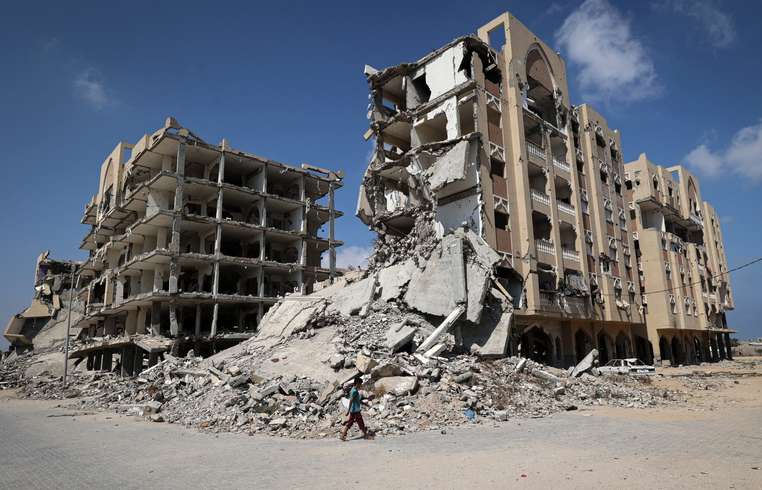
In a move that has revived Israeli-Palestinian tension, new satellite imagery reveals Israel's construction of a substantial berm through the Gaza Strip, signaling ongoing control over the territory. This 14-mile earthen barrier is seen by many as evidence of Israel's commitment to maintain a regime of control, despite claims of eventual withdrawal. Chris Doyle, from the Council for Arab-British Understanding (CAABU), argues that this indicates Israel has no intention to withdraw, a view underscored by the Gaza wall imagery. The imagery, publicly released recently, has surfaced concerns of morphing the ceasefire line into a permanent border. The Israeli military has publicly confirmed that the barrier aligns with the outlined plan in the ceasefire agreement with Hamas from October 2023, following the violence that erupted due to Hamas's assault on southern Israel. The barrier, also referred to as the 'Yellow Line,' serves both as a demarcation and a security measure. The Israeli Defense Forces (IDF) assert that this setup is essential for protecting their citizens and the boundaries of the western Negev. Critics, however, argue this barrier exacerbates the humanitarian strife in Gaza, affecting over 2 million residents already living under difficult conditions. The physical boundary, which has expanded notably since its initial construction, partitions significant Palestinian areas, further isolating communities like Khan Younis and northern Gaza City. It effectively creates enclosed zones and has led to casualties among Palestinians unaware of the line. The IDF highlights the necessity of this measure to prevent infiltration by Hamas militants, despite allegations of civilian harm. Reports show that the military has leveled structures and clear land, reinforcing their strategic positions. Meanwhile, humanitarian organizations emphasize the increased despair among Gaza's civilian population, with Mercy Corps criticizing the ceasefire for not offering substantial relief or reducing conflict. This protracted situation remains at a standstill, with Doyle highlighting the pressures Palestinians face, potentially spurring them to depart from Gaza. The development of infrastructure along the barrier is arguably making these conditions worse, forcing international observers to call for renewed negotiations and humanitarian interventions.
About usyoo

Categories
Tags