
News - The UK Navy Revolutionizes Sea Drone Deployment with Aerial Drops
Business Strategy
The UK Navy Revolutionizes Sea Drone Deployment with Aerial Drops
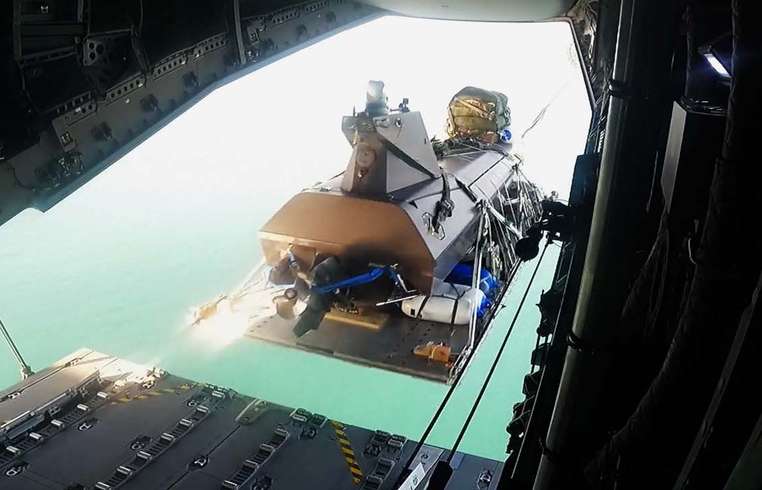
The UK Royal Navy has unveiled a groundbreaking advancement in the deployment of sea drones by conducting successful airdrops from a turboprop aircraft, a pioneering move in military maritime technology. In collaboration with Kraken Technology Group and Capewell, the Royal Navy executed a series of innovative airdrop trials involving the K3 Scout, a versatile 27-foot-long uncrewed surface vessel equipped with advanced electronic warfare systems. These trials mark a significant milestone as sea drones were parachuted from an impressive altitude of 1,300 feet over the North Sea. The trials, conducted over a six-day campaign, included four precise airdrops from an Airbus A400 transport aircraft under Sea State 4 conditions. This capability dramatically extends the operational reach and flexibility of sea drones, negating the need for traditional port deployment or proximity to support vessels—a traditional limitation for such uncrewed vehicles. Captain Adam Ballard, leading the Royal Navy's uncrewed surface vessel program, emphasized the strategic importance of exploring deployment from 'mother ships' and 'mother aircraft,' as it directly addresses the challenge of autonomous vehicle self-deployment. The K3 Scout, tailored for a range of missions including sea and shallow water strikes, casualty evacuations, and reconnaissance, can operate continuously for up to 30 days, carrying payloads up to 600 kilograms. The Navy's push towards integrating uncrewed vehicles comes in the wake of their proven effectiveness, as demonstrated in recent global conflicts where sea drones played pivotal roles. The UK government, recognizing the strategic advantages, has committed $16.5 million to acquire 20 K3 Scouts, setting a robust foundation for future naval and military strategy operations, promising enhanced versatility and operational capability across various challenging environments.
About usyoo

Categories
Tags