News - Global Markets React as Oil Prices Spike Amid Ceasefire Uncertainty
Business Strategy
Global Markets React as Oil Prices Spike Amid Ceasefire Uncertainty
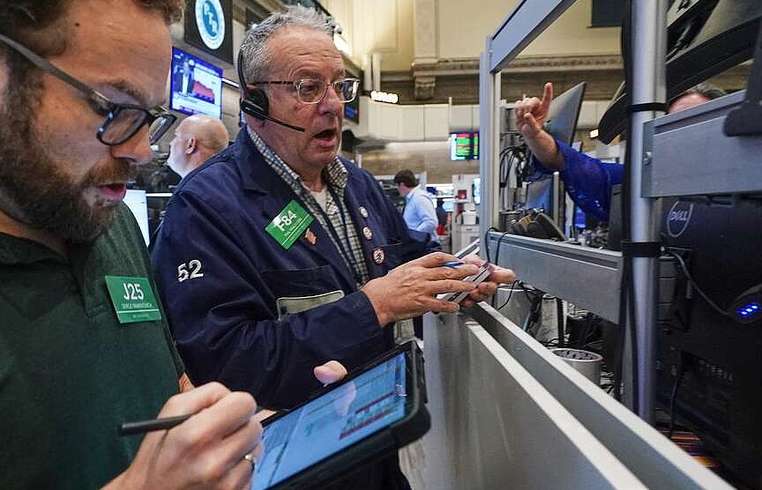
The intricate dance of global economic indicators took center stage as oil prices surged while stock markets displayed cautious bearishness across the world on Wednesday. President Donald Trump's contradictory messages regarding the precarious ceasefire with Iran painted a volatile picture for investors and market analysts. The clouds of uncertainty were mirrored in the movements of the S&P 500, which initially dropped by 1.1% before recovering slightly to end with a 0.3% decline. This comes after Trump's mixed declarations, first suggesting the truce was 'over,' then downplaying the re-escalation as not necessarily leading to a broader conflict. His statements fueled existing anxieties about potential inflation spikes stemming from increased war activity and oil supply restrictions. Oil markets reacted sharply, with Brent crude escalating 5.2%, topping $80 briefly, a reminder of its sharp journey from the nearly $120 peaks seen earlier in the conflict. The possibility of war stifling the Strait of Hormuz remains a significant threat to global oil transports, inducing trepidation about its inflationary effects and the resulting pressure on central banks to narrow interest rates further. The Dow Jones Industrial Average saw a notable plunge of 576 points, a 1.1% decrease, while the tech-heavy Nasdaq composite managed a modest rise of 0.2%, buoyed by a recovery in AI stocks. Nvidia leapt 3.7%, providing crucial support for the Nasdaq, as Wall Street recognizes its weighty influence due to its sizable market value. Broadcom stood out with a 4.8% climb following a strategic collaboration announcement from Apple, whose commitment to designing bespoke components positions Broadcom for lucrative gains valued at over $30 billion. Aside from tech, sectors such as housing and travel faced headwinds. Rising U.S. Treasury yields hinted at heightened future mortgage rates, negatively impacting stocks like Builders FirstSource and PulteGroup, which dipped 5.4%, and D.R. Horton down 4.6%. American Airlines and Carnival bore the brunt of escalating fuel costs, sliding 4% and 3.9%, respectively. In the bond market, yields on the 10-year Treasury inched upward, nearly breaching 4.60% before settling at 4.57%, reflecting investor fears over the resultant economic pressures. Overseas, European markets faltered after Trump's ominous comments, with Germany's DAX and France's CAC 40 both receding by 2.2%. Asian markets battled their own turbulence, largely centered on the AI sector, which has seen volatile sentiment shifts. Amidst these fluctuations, the Hang Seng index in Hong Kong bucked the negative trend, rising 3% as Zhipu surged 13.4%, helped by investor confidence and a wave of positive restructuring amid cornerstone investor agreements. The current landscape underscores the perils and potential of navigating a global market defined by geopolitical tensions and rapid technological advancements.
About usyoo

Categories
Tags