News - Court Clash over Voter Database Access Intensifies
Business Strategy
Court Clash over Voter Database Access Intensifies
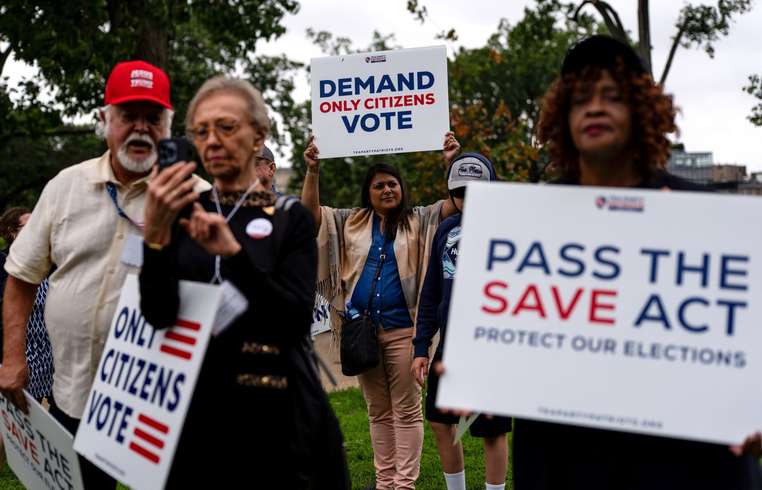
A legal tug-of-war has unfolded between two federal districts as Florida, Indiana, Iowa, and Ohio navigate a contentious battle over access to the Department of Homeland Security's (DHS) immigration-status database, known as the SAVE program. This conflict highlights the complexities and contradictions in federal oversight versus state-led electoral measures. The clash began when a Florida federal judge, T. Kent Wetherell II, mandated that the DHS reinstates the database's bulk-upload and Social Security number search functions. These features, now demanded by the four Republican-led states to filter noncitizens from voter registration rolls, were previously dismantled by the DHS following a ruling from Judge Sparkle L. Sooknanan in Washington, D.C., aimed at curtailing potential privacy infringements. The inconsistent court orders have put the DHS in a particular spot, with Wetherell openly acknowledging the agency's bind due to divergent judicial mandates. He maintained that while his ruling stands distinct, the rationale behind the SAVE system's shutdown failed to convince him, particularly given its intended function as a verification mechanism for citizenship and immigration status. Originally, the SAVE database was designed to verify noncitizens' eligibility for public benefits. However, its operation expanded dramatically under the Trump administration, morphing into a complex database interlinking DHS records with the Social Security Administration, albeit raising significant privacy concerns amid its broadened scope. Judge Sooknanan, appointed during President Joe Biden's tenure, criticized these expansions. Her June ruling asserted that this extensive database compiled sensitive personal data, including citizenship status, potentially endangering civil liberties and facilitating dubious voter purges. She contended these measures were part of a hurried response to an executive order prompting a new federal mass voter verification system, ultimately compromising accurate voter roll maintenance. While the states remain resolute about accessing the SAVE system for electoral integrity, advocacy groups and Sooknanan caution against the misuse of unreliable data and unwarranted voter purges that might inadvertently disenfranchise legitimate voters. This judicial back-and-forth underscores the precarious balance between fortifying electoral processes against fraud and safeguarding citizens' personal rights and civil liberties. The resolution of these opposing rulings will have significant implications not only for the affected states but also for nationwide electoral integrity and privacy rights discourse. The situation continues to develop with both courts drawing lines over crucial judicial and administrative principles, while the eyes of the nation stay fixed on this unfolding legal spectacle.
About usyoo

Categories
Tags