
News - Trump Considers Reviving F-35 Sales to Turkey Amid Israeli Caution
Business Strategy
Trump Considers Reviving F-35 Sales to Turkey Amid Israeli Caution
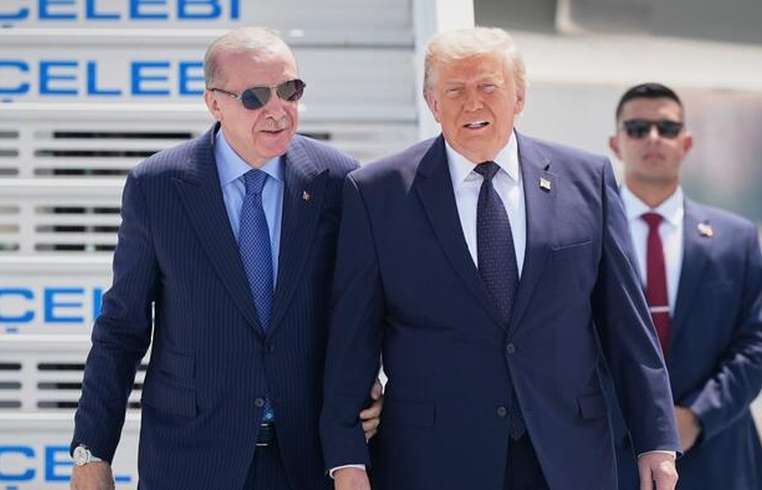
A complex geopolitical tug-of-war is unfolding between Israel, Turkey, and the United States, with President Trump's potential arms deals at the center. Israeli Prime Minister Benjamin Netanyahu expressed grave concerns to President Trump about Turkish President Recep Tayyip Erdoğan's heavy anti-Israel rhetoric and escalating regional ambitions. During a recent call, Netanyahu urged Trump to veto any U.S. weapons sales to Turkey, focusing particularly on the consequential F-35 fighter jet sales. Turkey had previously been removed from the F-35 development program in 2019 after acquiring Russia's S-400 missile system, raising concerns over the security of the U.S.'s advanced jet technology. Yet, President Trump recently hinted at reconsidering the sales ban, praising Turkey as a steadfast partner, and pointing to the strength of Turkish-American relations during his trip to Ankara where he was greeted with grand ceremonies. Trump officially acknowledged that the sale of F-35 jets to Turkey is under consideration, emphasizing the advanced capabilities of the aircraft. This shift follows reports suggesting that the Trump administration may signal intent to restore arms deals with Turkey, including a notable $700 million agreement for fighter jet engines. Legal constraints remain as the U.S. Congress enforces a ban initiated by Trump during his first term, which was later made into law. Despite this, Trump’s statements have raised alarms in Israel, with Netanyahu labeling Erdoğan as a provocateur threatening regional stability, specifically citing Erdoğan's rhetoric towards Israel and actions in Cyprus and Greece. The debate over F-35 sales to Turkey is not solely about economics but centers on strategic balances within the Middle East where Israeli air power acts as a cornerstone. Israel fears that granting Ankara access to these advanced jets might tip scales unfavorably, challenging crucial U.S. and Israeli defense postures. Beyond Israeli concerns, the possible sales have broader implications given Turkey's influence in the ongoing Syrian conflict. With Turkey supporting the new government in Damascus against ISIS, and Israeli forces maintaining a presence in southern Syria, tensions could heighten if Turkey fortifies its military arsenal with American technology. Overall, President Trump finds himself navigating a complex web of alliances, national interests, and international objections, with Israel and Turkey each lobbying for favorable U.S. decisions that could shape the region's future power dynamics.
About usyoo

Categories
Tags