News - A rare historic copy of the Declaration has been uncovered in UK archives.
Business Strategy
A rare historic copy of the Declaration has been uncovered in UK archives.
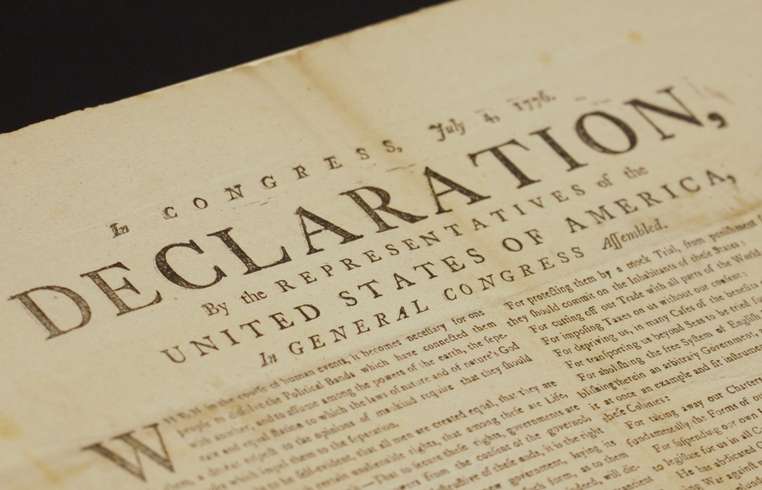
A remarkable discovery has been made at Britain's National Archives by longtime volunteer Michael Scurr. Unearthing a historical gem while cataloging documents, Scurr found an early copy of the Declaration of Independence among the papers of an 18th-century Royal Navy captain. Attached to a report concerning the capture of the American privateer Dalton in late 1776 was an unassuming document labeled merely as "another paper." Upon careful examination, it revealed itself as one of only 11 extant copies of the famed Exeter printing. Peter Bevan, the head of the National Archives' project, elaborated on the profound significance of this document. This early copy was printed almost immediately following the Declaration’s historic signing on July 4, 1776, intended to announce the colonies' definitive separation from Britain. Its presence on the Dalton underscores the larger-than-life ideals it encapsulated, proclaimed aboard a vessel devoted to disrupting British maritime dominance under orders from the Continental Congress. Dated between July 16 and 19 of 1776, this edition ties back to a tumultuous period as the young nation found its bearings amid conflict. The Dalton, acting under the Congressional mandate, was pursued and finally seized by the HMS Raisonnable, resulting in the imprisonment of its crew under harsh conditions. Accounts from the time tell of the severe trials faced by these men, captured in the writings of a youthful Charles Herbert and others who endured their confinement. The significance of this discovery extends beyond a mere historical curiosity, providing a tangible connection to the sacrifices and the tenacious spirit of the individuals engaged in the American fight for independence. Historians such as Matthew Skic applauded the discovery for its potential to enlighten contemporary audiences about the era’s unyielding complexities and enduring legacies. This find represents both a literal and symbolic journey back to 1776, bridging temporal gaps to reaffirm the persistent influences of revolutionary ideals. At a time when transatlantic tensions were at their peak, this declaration carried the message of autonomy and aspiration across oceans—a remarkable testament to historical resilience and continuity. The broader implications affirm there’s much more to unearth about the American Revolution, even as the 250th anniversary approaches, making Scurr’s find more than a paper—it’s an artifact that continues to impart knowledge and ignite curiosity.
About usyoo

Categories
Tags