News - Peter Thiel Predicts a Socialist Shift in the Democratic Party
Business Strategy
Peter Thiel Predicts a Socialist Shift in the Democratic Party
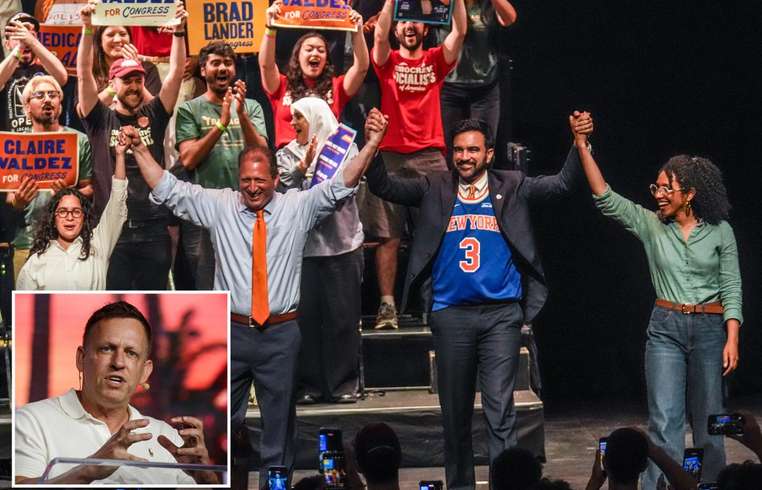
In a bold assertion at the Aspen Institute's Ideas Festival, billionaire Peter Thiel cautioned the predominantly liberal audience about a looming shift within the Democratic Party towards democratic socialism. During a panel discussion focused on humanity's future trajectory, Thiel pinpointed a persistent cultural, technological, and economic 'stagnation' as a catalyst for political upheaval, one he sees as deeply destabilizing in the long run. Thiel articulated his viewpoint that this stagnation has deeply influenced various political ideologies, arguing, 'My generation was the first where things seemed really stuck, and I believe millennials are faring worse than their boomer predecessors, with Gen Z feeling the impact even more profoundly.' He suggested that these sentiments push individuals to seek solutions outside the conventional political spectrum, manifested most notably in the Republican transformation under Trump and the rejection of the Bush-era neoconservative consensus. Aligning a similar seismic shift within the Democratic framework, Thiel stressed a potential democratic socialist capture of the party, urging the liberal faction present to appreciate the gravity of this transition. 'This is not just an unfounded reaction; it's born from genuine frustration with the status quo's stagnation,' he remarked. The audience, largely comprised of progressive thinkers, reacted audibly to his claim, particularly as he indicated that the GOP's relevance is secondary compared to potential Democratic shifts. 'If the Democratic Party transforms, it signifies a pivotal turn for the nation,' Thiel elaborated. The timing of his comments is notable—the consequent days have seen democratic socialists gaining ground, with recent political victories in New York and Colorado underscoring his point. As a forceful advocate for technological advancement, Thiel emphasized the need for the United States to embrace artificial intelligence actively, warning against deceleration in this domain as tantamount to courting disaster. 'A halt would lead us to zero-sum, contentious politics, aggravating issues without progress,' he cautioned. Underscoring his argument, Thiel's engagement in political discourse has a storied history, from his role at the 2016 RNC to backing prominent GOP figures. His perspective on embracing innovation over stagnation continues to influence political and technological dialogues.
About usyoo

Categories
Tags