News - GOP Advocates 'Aid to Trade' Strategy for U.S.-Israel Partnership
Business Strategy
GOP Advocates 'Aid to Trade' Strategy for U.S.-Israel Partnership
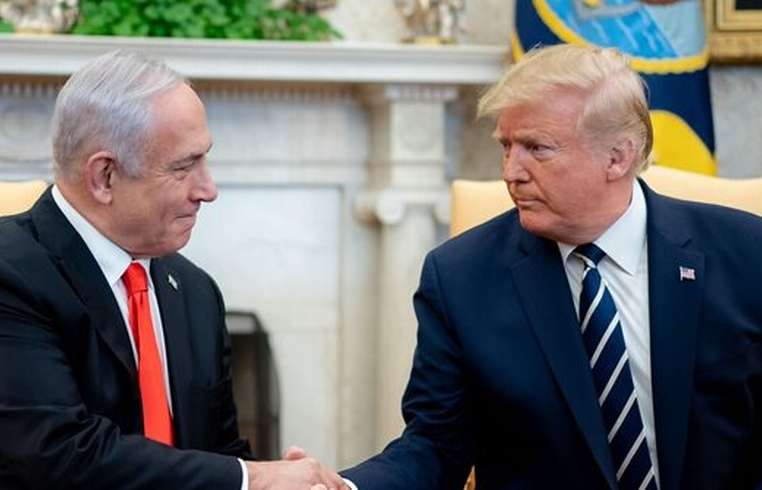
In a move to redefine military and economic relations, Republican Representatives Marlin Stutzman of Indiana and Abe Hamadeh of Arizona have introduced a new resolution aimed at transitioning U.S. aid to Israel from direct military assistance to a robust partnership focused on trade and mutual technological development. This shift marks a strategic transformation supported by Israeli Prime Minister Benjamin Netanyahu, pointing to Israel's burgeoning economic prowess. Currently, the United States provides Israel with $3.8 billion annually as part of a military aid program that is scheduled to expire in 2028. Stutzman and Hamadeh's proposal anticipates this endpoint by envisioning a future partnership that emphasizes defense cooperation, technology co-development, and strategic investments rather than financial aid. Netanyahu, having discussed this vision with U.S. representatives during meetings in Jerusalem, has expressed approval for a shift from aid to a more equal partnership. According to Netanyahu, Israel's robust economic growth—nearing a GDP of $1 trillion—empowers the country to transition from an aid-receiving nation to a self-reliant partner on the global stage. This sentiment has been echoed in his recent interviews, advocating for a gradual decrease in American financial support in favor of collaborative endeavors like missile defense systems, artificial intelligence, cybersecurity, and next-generation military technologies. The resolution aligns with the current geopolitical environment and the successful diplomatic framework established by the Abraham Accords. Abe Hamadeh highlighted on social media the shift towards a strategic partnership that encompasses both economic cooperation and defense innovation, calling the initiative the 'next chapter' of U.S.-Israel relations. Relevant discussions about a future memorandum of understanding have already begun. U.S. Ambassador Mike Huckabee has hinted that upcoming agreements could heavily focus on trade dynamics instead of traditional aid structures. While this resolution doesn't alter existing accords, it proposes a new direction, laying down the foundation for a bilateral relationship centered on shared interests and initiatives. This strategic initiative reflects a mutual understanding that has grown over decades of close U.S.-Israeli alliances, driven by shared democratic values and security interests in a volatile Middle East. As Netanyahu suggests, Israel is prepared to chart its course while upholding a strong and collaborative relationship with Washington. Details for the next steps in establishing this framework continue to be a crucial part of diplomatic engagements between the two nations.
About usyoo

Categories
Tags