News - Arachnid Astonishment: Daddy Longlegs Devour Frogs
Business Strategy
Arachnid Astonishment: Daddy Longlegs Devour Frogs
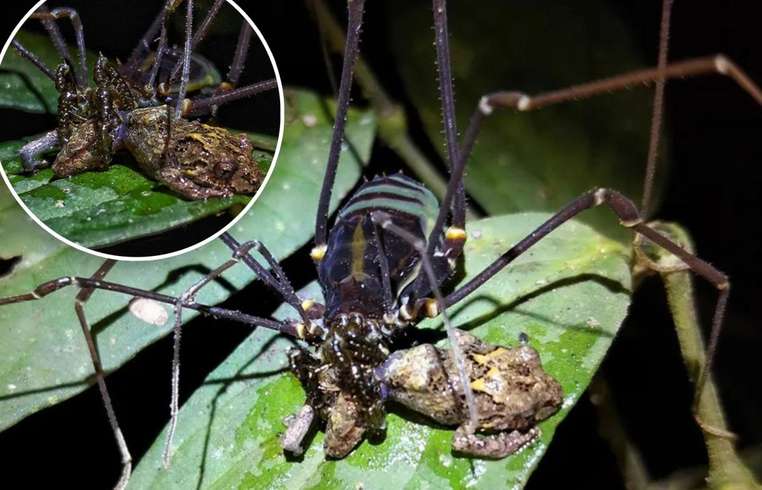
In an unexpected twist in the animal kingdom, researchers have uncovered that daddy longlegs spiders are consuming frogs larger than themselves in a region-spanning change of predator-prey dynamics in South America. Notoriously recognized for ingesting insects and other small invertebrates, these arachnids are now pursuing a more ambitious prey - amphibians. The detailed findings of this surprising predatory behavior are outlined in the journal Ecology and Evolution. Biologists, including Luís Fernando García from the University of the Republic in Uruguay, were gobsmacked at the discovery. 'Finding these animals eating frogs was a complete surprise, we didn’t expect them to be able to capture them,' García shared with Live Science. Investigations were based on varied sources, including firsthand field observations across the vibrant ecosystems of South America, scholarly research papers, and posts on the citizen science platform iNaturalist. It was the contributions from everyday nature enthusiasts that frequently showcased these formidable spiders consuming frogs. Naturalist Lizardo Proaño, co-author of the study, noted to Smithsonian Magazine how he initially underestimated the significance of observing a daddy longlegs in the act of frog consumption. 'I thought it was normal because frogs are good prey for everybody,' observed Proaño, comparing the softness of frogs to 'gummy bears in the forest.' Contrary to prior assumptions, where these eight-legged creatures were thought to scavenge dead frogs, recent evidence suggests they are active hunters. The frogs, often captured alive, were sometimes more than 1.29 times the size of these spindly arachnids, showcasing a remarkable physical prowess. Armed without venom, the harvestmen possibly deploy their robust spiny mouthparts or pedipalps to hold their slippery prey, akin to the technique of an armed mantis. Jose Valdez, an ecologist not associated with the study, postulated, 'They must rely entirely on physical restraint.' The possibility of targeting compromised frogs – those wounded, slow, or sleeping – is also on the table. Esteban Calvache, a biologist and part of the research team at Mashpi Lodge, could not pinpoint a definite cause but proposed that the plentiful amphibians in the region make them an accessible food source. He stated, 'If they can capture one, why not eat one?' Larger-bodied tropical species particularly seem drawn to such sustenance to maintain their heftier physique. Although more investigations are warranted to decode the full extent and technique of this unusual culinary choice, it is clear the flexible dietary habits of these creatures have taken an unanticipated turn. This isn't an isolated instance of arthropods consuming vertebrates. Notably, the Goliath bird-eating spider, the largest known arachnid, dines on vertebrates ranging from mice to birds. Curiously, these gigantic spiders are themselves part of the human diet in certain South American tribes, their taste reportedly akin to crab or smoked shrimp.
About usyoo

Categories
Tags